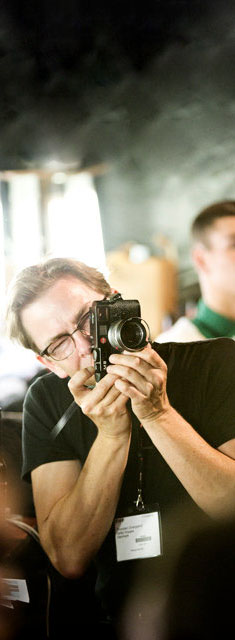
Leica M9 Digital Rangefinder Camera - Page 2 Index of Thorsten Overgaard's user review pages on Leica M9, Leica M9-P, Leica M-E, Leica M9 Monochrom, Leica M10, Leica M10-P, Leica M10-D, Leica M10-R, Leica M10 Monohcrom, Leica M11, Leica M 240, Leica M-D 262, Leica M Monochrom 246, Leica SL, Leica SL2, Leica SL2-S, as well as Leica TL2, Leica CL, Leica Q, Leica Q2 and Leica Q2 Monochrom:
The feeling of the Leica M9 - tool of the artist
By: Thorsten Overgaard. December 2009. Latest update September 9, 2019.
Add to Flipboard Magazine. The pictures of Birgit Krippner (top of page and below here) are really going to get the pixel-peepers (people who enlarge digital images greatly to study the pixels so as to compare the "image quality" of different cameras) up their chairs. Birgit Krippner produced these two images after having changed her camera from Nikon D700 to the Leica M9, and to me they illustrate how the Leica M9 is not a machine to create pictures, but a tool of the artist to produce emotions. I bet these images won't leave you for a while.
How the idea came about I'll leave to the viewer to think about. But can one imagine such an idea would come about with an autofocus camera?
Read the interview with Birgit Kippner on page 5.

Birgit Krippner, Leica M9 with 50mm Summilux-M f/1.4, 160 ISO.
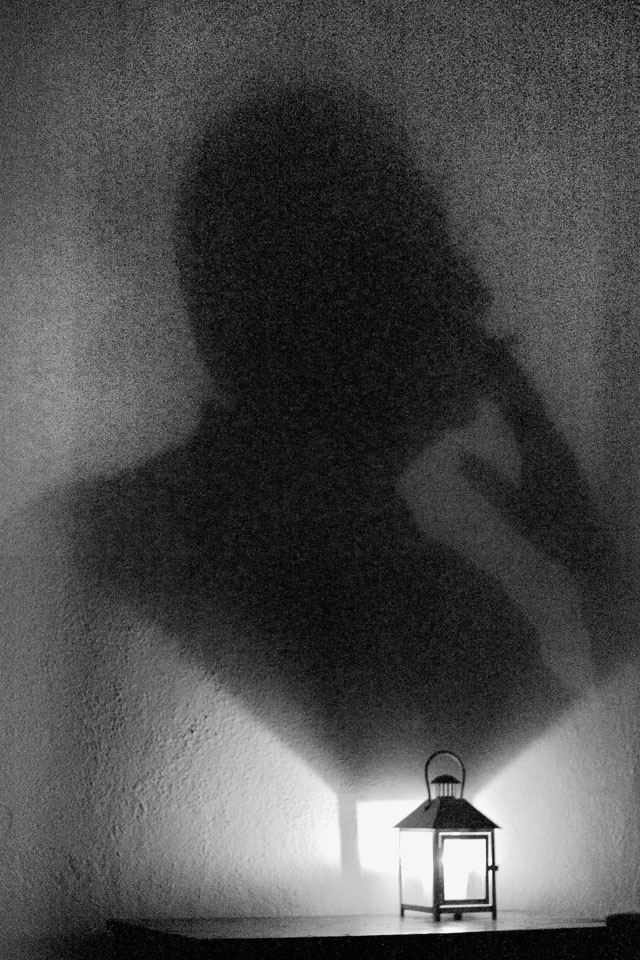
Photo by Jonathan Slack. Leica M9 at 2500 ISO, 1/11 second, 35mm Summilux-M f/1.4.
| |
|
|
|
 |
| |
Buy the Best-Selling eBook by Thorsten Overgaard:
"Finding the Magic of Light"
"I have just been reading your eBook last night, which opened my eyes for more than
I have been thinking about before. You have a great sensitivity that I feel
connected with, and I enjoyed every word."
"I am reading your book, Finding the Magic of Light. Exactly what I crave."
"I find your books very helpful and thought-provoking."
"A must have. Personally useful for street photography."
|
|
|
|
|
| |
Also available in German:
"Die Magie des Lichts Finden"
 DE DE |
|
In this easy to read and apply eBook, Thorsten Overgaard takes you on a journey to see, understand and simply use light.
"One of the most important ways to get an aesthetic and pleasant picture is to find the good light."
"Finding the Magic of Light"
New 2nd edition (April 2015)
eBook for computer and iPad.
(87 pages)
Only $47


Order now - Instant delivery.
(Note: If you bought the first edition of this book, this new edition is free. Simply send an e-mail for your free update).
★
★
★
★
★
★
|
| |
|
|
|
Jonathan Slack of Great Britain was one of several photographers who had the opportunity to test the Leica M9 prototype (called Leica P8 or P-864) since June 2009 to help Leica stremline the camera and its software. In his September 9, 2009 review, Words, he says:
"Everyone has their pet wishes, and to fulfill all these wishes companies like Canon and Nikon have made increasingly complex cameras with more and more features, many of which are used rarely and by only a few people. With the Leica M9 it seems to me that Leica have added the features that people really need, but resisted the temptation towards over-complexity. Of course it isn’t perfect (otherwise how could they sell us an M10!)."
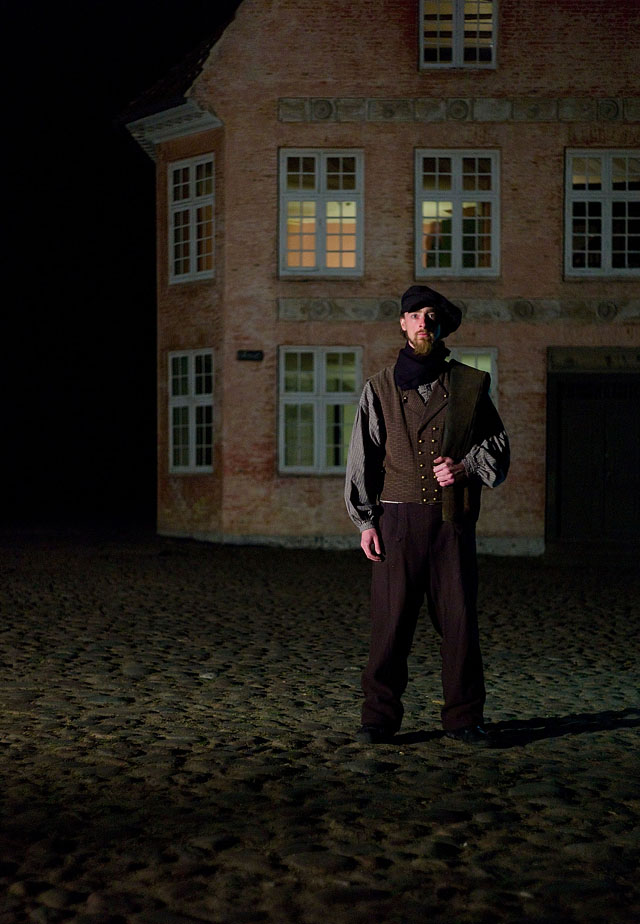
I've done a lot of photographs for The Old Town in Denmark the first week of Leica M9, and this is one of them. It's an outdoor evening shoot with a 2000w blonde light (3200K) as only light from left, and then normal tubes and tungsten lights in the house behind. Leica M9, 50mm Summicron-M f/2.0, 800 ISO
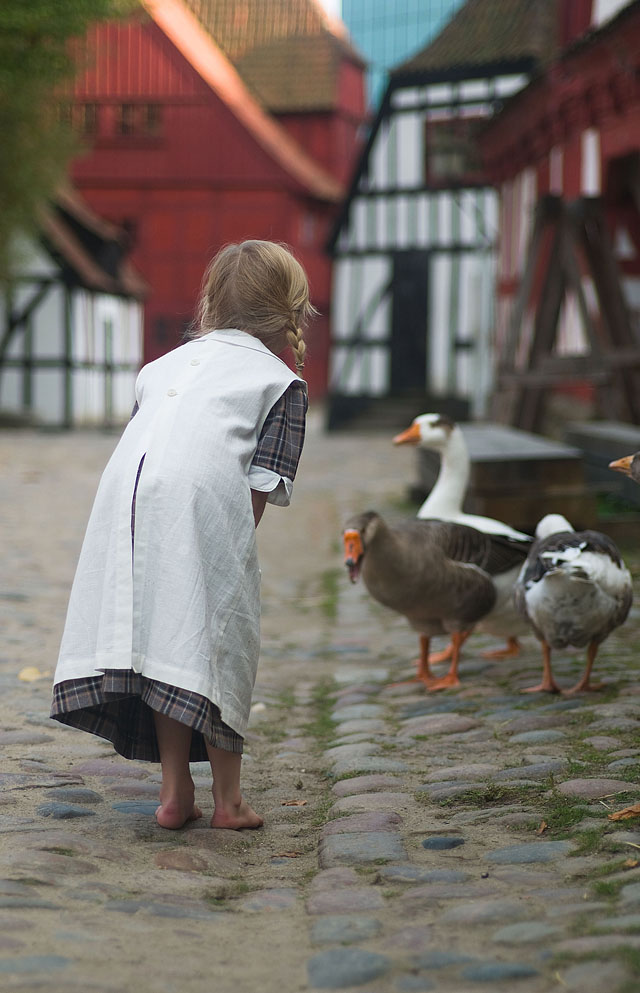
The goose wisperer, Leica M9 with 90 mm Tele-Elmarit f/2.8, 200 ISO.
The new lenses for Leica M9
Three interesting lenses saw the light months before the Leica M9 became a reality. All exremely lightstrong lenses that display an almost over-human control over light. The two Summilux-M lenese, Leica 21mm Summilux M f/1.4 and Leica 24mm Summilux-M f/1.4, and the fastest standard lens in the world, the 50mm Noctilux-M f/0.95.
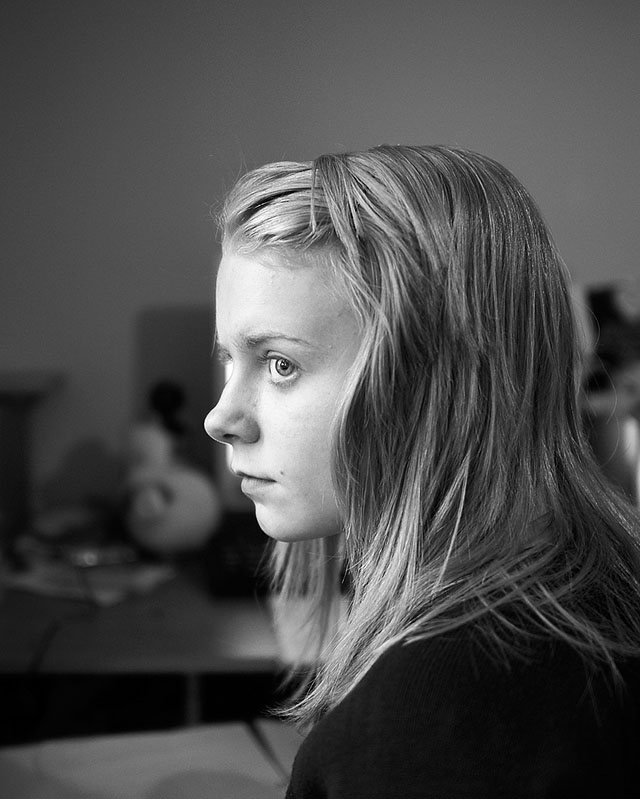
Leica M9 with 24mm Summilux-M f/1.4 @ f/1.4, 400 ISO. It's actually a cropped version of the picture and was taken at 0.7 meter distance. Photo by Simon.
Simon who did the above picture, says of the 24mm Summilux-M f/1.4:
"Having read Sean's review of the 24 Lux and seeing the fringing he got wide open I did lots of shots at the dealer at things like lamp shades and dark flowers in a bright shop window, the kind of stuff that would show fringing. However, in all those pictures, whether at f/1.4 or smaller, I could not get it to occur, and my own opinion was that for 99% of pictures it probably wouldn't be a problem.
The picture is fully open. With a close focus distance of 0.7m you can get quite creamy backgrounds although not anything like with a 50 Lux or a 75 Cron. As the DOF is relatively large at f/1.4 (e.g. compared to a 50 Lux) you will always be able to make out what an object is. However, I find the OOF areas to be very nicely rendered."
In a time of less advanced lenses for digital...
Where "everybody else" seem to rationaize their lenses and take shortcuts by making less lightstrong lenses (because digital cameras can go higher in ISO why that is a more economical way than creating complicated, expensive and large lenses of exotic glass), Leica Camera AG seem determined to broaden the Summilux range of lenses. Summilux is the name of all f/1.4 lenses in the Leica lens range (Summicron for f/2.0 lenses, Elmarit for f/2.8 lenses).
Apart from the extra light the photographer get to work with, and thus enables him to photograph even more discrete in dark places, increasing aperture hole also influence dramatically the look of the photo. The depth of Field (DOF) becomes extremely narrow and demanding for the photographer. So much more fun, if that is the fun one is looking for. But also the ability to tell a story or direct the viewer by using selective focus: What is in focus is what attracts the eye, what is not becomes atmosphere.
What does f/1.4 mean?
For a lens to be f/1.4 the opening through the lens has to be the focal length divided with 1.4, which is why we don't see 500mm f/1.4 lenses around; the diameter of the open area where the light can pass through would have to be 500mm/1.4 in diameter = 360mm! It would be almost a suitcase of glass.
But a 21mm lens f/1.4 requires a aperture hole through of "only" 15mm. It may sound a lot easier than the 500mm lens f/1.4, but then consider that you work with a 90 degrees angle of view - you have to control light from 90 degrees rays so that the light hit the sensor and create a crisp and sharp picture without distortions.
I'm no expert, and hardly intereste in how they manage to do it, but I do know it involves a piece of paper, a pencil and a calculator to figure that one out. As well as very special glass qualities, hand-assembling with tight controle. Hence the prices of these small photographic jewels.
Read more about the Summilux-M lenses in the Steve Huff reviews with sample photos from the 21mm Summilux-M f/1.4 and the 24mm Summilux-M f/1.4.
| |
Get my Leica Presets
for Lightroom and Capture One
|
|
| |
Overgaard's Leica Presets for: Lightroom CC Classic (7.4 -->)
Lightroom CC (version 1 through 7.2)
Lightroom CC (cloud-based 1.0)
I have made a few essential Presets for Lightroom which do minor adjustments to the Leica files, so as to get the tones exactly how I want them.
The Presets have as their ideal, the Leica M9 sensor, as well as the Kodachrome film (which also happens to be the ideal for Leica, when they developed the Leica M9 sensor). Not that it matters much, but that is the reason why I made my own Presets: To get the that look, rather than a “digital sensor look”.
More info
Buy now. Instant delivery.
#1818-0818
$48.00
|
|
Overgaard's Leica Presets
for Capture One Pro
I have made a few essential Styles for Capture One that does minor adjustments to the Leica files, so as to get the tones exactly how I want them.
The Styles have as their ideal, the Leica M9 sensor, as well as the Kodachrome film (which also happens to be the ideal for Leica, when they developed the Leica M9 sensor). Not that it matters much, but that is the reason why I made my own Styles: To get the that look, rather than a “digital sensor look”.
More info
Buy now. Instant delivery.
#1817-0818
$48.00
|
|
| |
|
|
|
|
| |
Read more about my Lightroom Workflow on this page |
|
Read more about my Capture One Workflow on this page |
|
| |
|
|
|
|
Leica M9 as the reportage camera

My daughter and her boyfriend at the hairdresser.
Something is definitely going on. Leica M with 50mm Summicron-M f/2.0, 400 ISO.
 This one is for John Thawley I guess. Youth, light and great lenses, what's more to ask for. Leica M9 with Summicron-M f/2.0, 200 ISO. This one is for John Thawley I guess. Youth, light and great lenses, what's more to ask for. Leica M9 with Summicron-M f/2.0, 200 ISO.

As if that persons full cahracter was summed up in that one hand-expression. In fact, it was. Leica M9 with 50mm Summicron-M f/2.0.
My son asked me, "why are you driving with your camera" the other day. The Leica M9 hangs over the shoulder while I drive. Easier that way when I have to get in and out the car, and I don't forget it then.
It's extremely compact. A camera body and two extra lenses you can wear if you have a neck to hang the camera around and two pockets. And you're all set. Your battery will last for the day, and your 16GB card will hold about 400 pictures in uncompressed DNG. Nobody notice the camera and it doesn't say a thing. Those who does notice seem to feel charmed by it. Being shot by a Leica M is a compliment of some kind, judging from peoples reactions - you don't get the "you damn paparazia" eyes from bystanders that you some times get when shooting dSLR.
Things happen when you wear your camera. You get to see things and document them. My daughter likes to sit on my arm, and she fits right in above the camera. No problem, and thus the camea goes where we goes.
 I like the mixed light on this one. Taken in the morning when I placed my daughter on the kitchen table in the kindergarten. Leica M9, 35mm Summicron-M f/2.0, 400 ISO. I wore my camera over the shoulder because I can . I like the mixed light on this one. Taken in the morning when I placed my daughter on the kitchen table in the kindergarten. Leica M9, 35mm Summicron-M f/2.0, 400 ISO. I wore my camera over the shoulder because I can .

A few hours later I had to pick her up as she had fallen on a step and had gotten a 8 mm long cut. We went to the hospital to get it cleaned and glued. Leica M9 and 35mm Summicron-M f/2.0, 800 ISO. Look how brave she looks, probably realized the potential of showing the pictures in the kindergarden.


It's like traveling in a time pocket, in a period of history where photographers were a welcomed part of life and portrayed it artistic and real. Somewhere between the time where cameras became mobile in 1920 and before they became obstructive in the 1970ies. There's a distinct difference between "standing behind a camera and looking at life" and being part of the scene.
The smaller camera, the more daring you get
msAlso, there's an interesting phenomen I'm discovering these days. Because it seems that the smaller the camera, the more daring you get with people. When you work with a dSLR it's like an unspoken agreement comes about between photographer and subject that "we're doing a picture now" and it becomes arranged or staged to some degree. Even if not said aloud.
With the M you have a choice of opearting stealth, or if you chose to stage a photo it's like people don't take the camera serious - but then at the same time sense this might be a better photo than with a huge camera. It's as if they're smiling inside and we're playing a fun game. Or if this is the moment they've been waiting for through all their career in front of all kinds of cameras. Finaly the right one.
I don't know, but I'm sensing something and I'm trying to define it and use it in a clever way.
 Leica M9 with 50mm Summicron-M f/2.0, ISO 640 and very mixed light. Leica M9 with 50mm Summicron-M f/2.0, ISO 640 and very mixed light.

Vola! Made her own print.

Hung up for drying. It's like I'm not there though we all know I am. Leica M9 with 50mm Summicron-M f/2.0, 640 ISO.
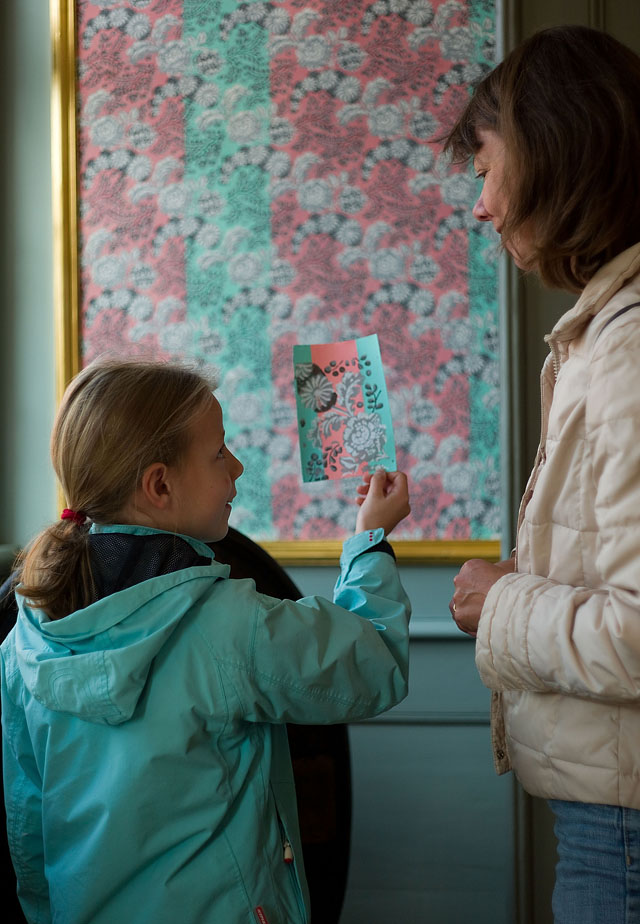
This is how it looks - the small print compared with the one on the wall. This one is re-taged (do that again you just did), except they don't know when we start, when we shoot and when we're done, so they are not in character all the time.
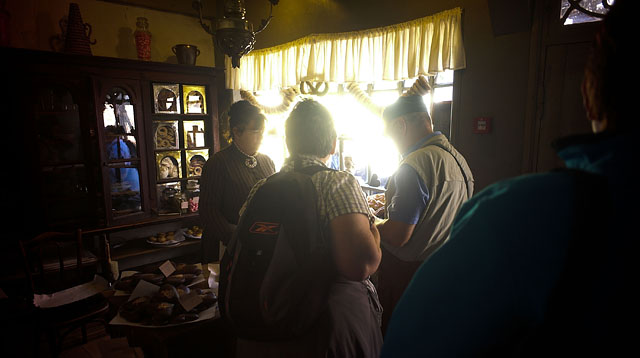
Leica M9 with 21mm Super-Angulion f/3.4. 800 ISO inside the bakery.

I got 15 shots of his neck, then he finally looked what was going on. Leica M9 with 35mm Summicron-M f/2.0, 200 ISO.
Wedding photography with the Leica M9

Leica M9 as a camera for wedding photography coming up next...
Leica M9 with 50 mm Summicron-M f/2.0, 200 ISO (the EXIF says 21mm but that is because part of the 6-bit coding on the lens was worn off).
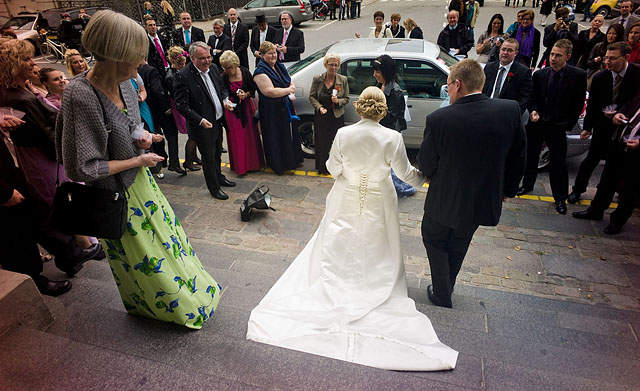
Leica M9 with 21mm Super-Angulon-M f/3.4, 400 ISO.
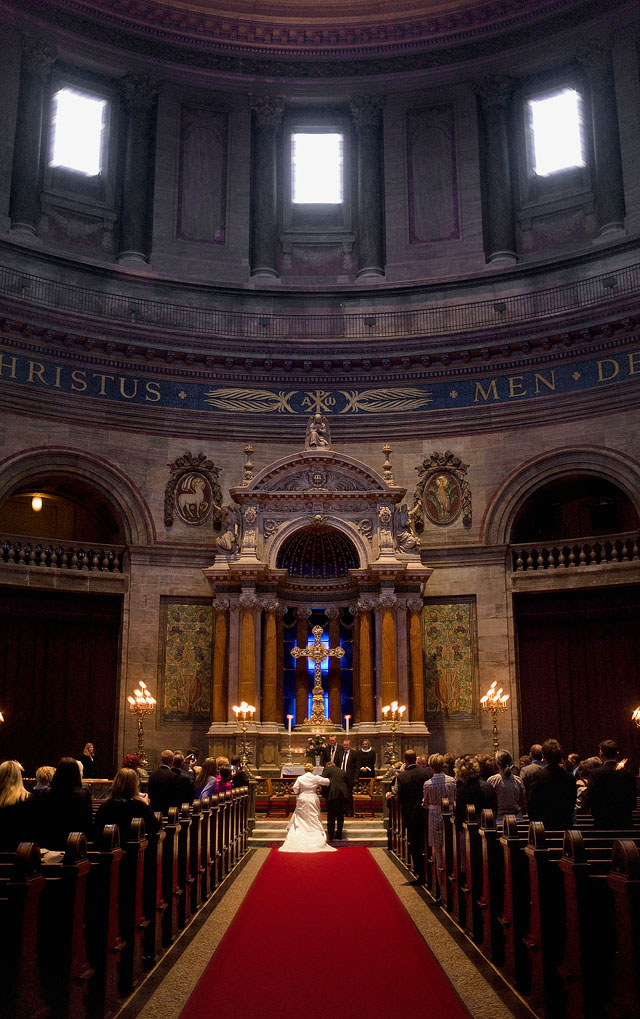
Leica M9 with 35mm Summicron-M f/2.0, 800 ISO.
Leica M9 and Leica R9/DMR comparison
Shooting this wedding, I also did "red carpet arrival" photos of all guests. For this I used daylight lamps, two KinoFlo 4Banks beauty lights and one ARRI 1,2 kW HMI lamp (see the article "Quality of Light" for more on what those lamps are), and then I used manual white balance setting.
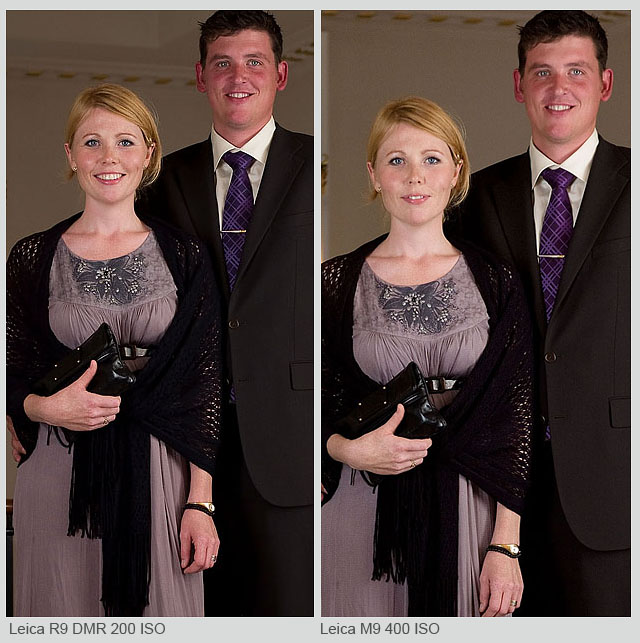
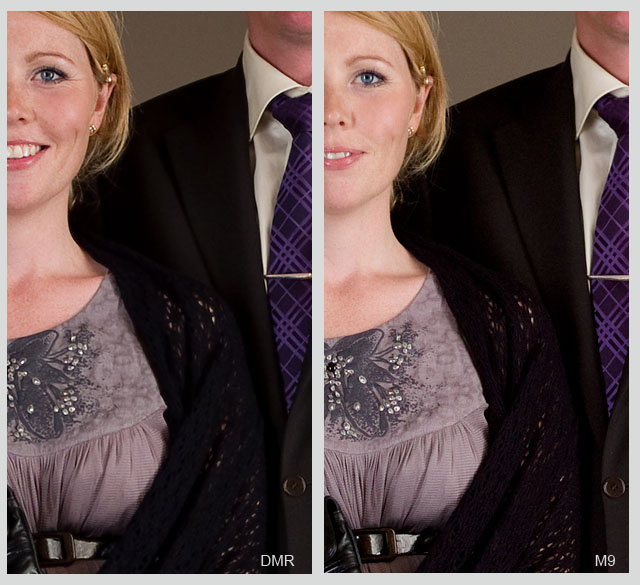
A closer look. What interest me is not so much there is of edge sharpness but how lenses and sensors capture lgith and details in 3D. The left shot with the DMR is the 35-70mm/2.8 ASPH at 200 ISO and the right one is the Leica M9 with 50mm Summicron-M f/2.0 at 400 ISO. The exposure is not exactly the same but you get a good impression of how close they are - actually. And that's a good thing, a very good ting.
Skin tones are right when white balance is
What is interesting is that the skin tones, tonality, details and overall is very much the same for the Leica M9 as the highly praised Leica DMR under these conditions: Which was 1) good quality light with 2) 5400 K daylight lamps, manual lightmetering with external lightmeter and 3) finished in Lightroom with minor adjustments.
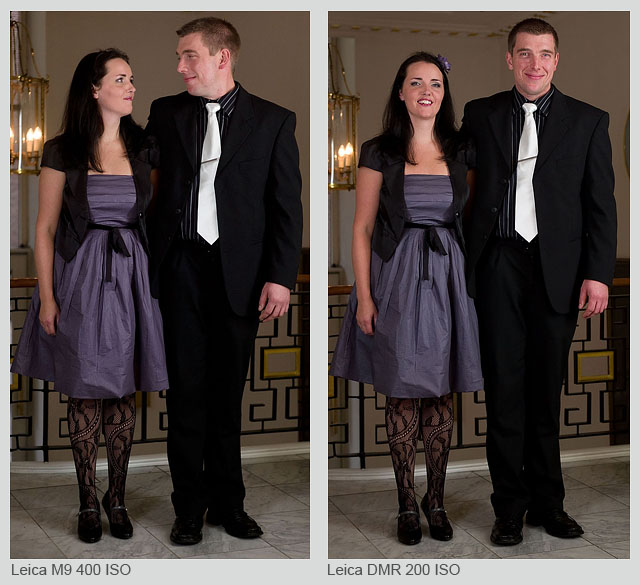
In case you didn't notice before, skin tones comes in many different variants even within the same nationality. But they're the same from DMR to M9 in these pictures. Also note the shadow details and the general handling of light reflections in texture.
I have noticed that skin tones are a bit off on the Leica M0 with firmware 1.002 when I use the preset white balances (Tungsten, Shadow, Daylight, etc) and with my experience on skin tones and colors using manual white balance (selecting Manual in the white balance menu and pointing the lens towards a WhiBal grey carrd), it's not the sensor but the preset white balance settings that are off. The sensor seem pretty capable of getting them right.
I take that this will be discussed to some degree, but in the end it's up to each user to get his workflow and colors correct - or as he or she wants them. But manual white balance is a good starting point.
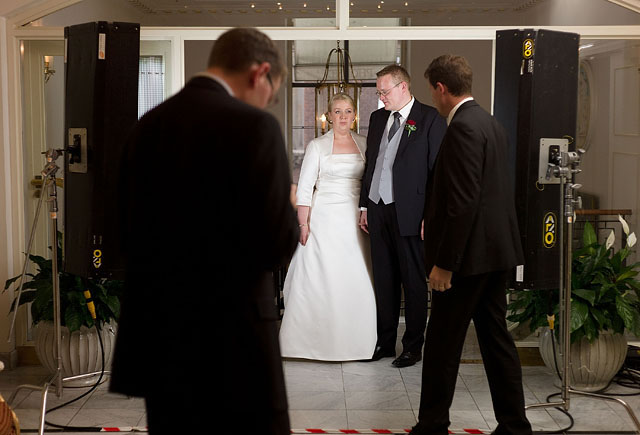
Here's a general view of the setup with the two beauty lights (KinoFlo 4Banks) on each side. To the right, pointing up in the ceiling is an ARRI 1,2 kW HMI daylight lamp as the ones known from film sets (see below).
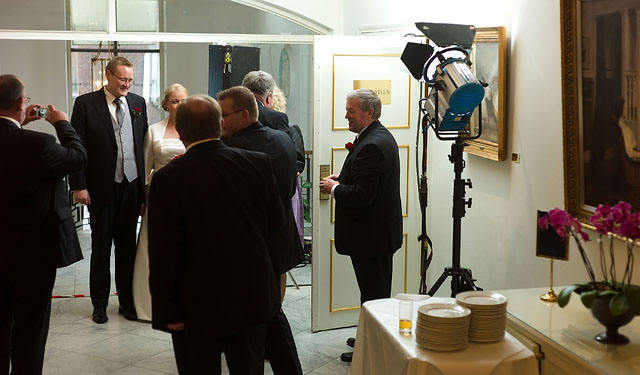
Here's the ARRI 1m2 kW HMI daylight lamp to the right, just providing white daylight all over.

CONTINUES ON PAGE 3 --->
Leica M9 Definitions:
| |
 |
| |
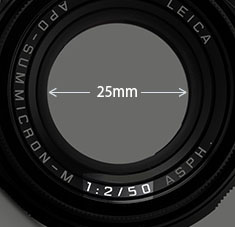
1:2/50 the description says. But what does it mean? |
| |
|
1:
Basically means 1 divided with. But why is it on the front of the lens? If you look close, a lens will often say 1:2/50mm on the front, meaning it is a 50mm lens with an f/2.0 apterture. The 1: itself is a ratio, that indicates that the aperture diameter (25mm) is the ratio of 50mm divided with 2.
It's a strange way of writing product information on modern products, but here's how it's right:
a) A lens is called a 50mm lens because there is 50mm from the sensor to the center of focus inside the lens.
b) A lens is f/2.0 when the widest opening is 50mm divided with 2 = The lens opening is 25mm in diameter at it's widest. Had it been an f/2.8 lens (1:2.8/50), the widest aperture opening would be 50mm divided with 2.8 = 17.8mm.
35mm
a) 35mm lens is a lens that has a viewing angle of view is 63°vertically, 54° horizontally and 38° vertically within a 35mm film frame:
b) 35mm film format is a standard film format where the actual widt of the film is 35mm. In photography the frame within the widt of the film is 24mm (on the width) and 36mm (on the lenght of the film roll). 35mm was first used in 1892 by William Dickson and Thomas Edison for moving pictures with frames of 24 x 18mm, using film stock supplied by George Eastman (Kodak), and became the international standard for motion picture negative film in 1909 [later other formats came about such as Academy Ratio (22 x 16 mm), Widescreen (21.95 x 18.6 mm), Super 35 (24.89 x 18.66 mm) and Techiscope (22 x 9.47 mm)].
Oskar Barnack built his prototype Ur-Leica in 1913 as a device to test film stock and/or motion picture lenses and had it patented, but Ernst Leitz did not decide to produce it before 1924.
c) 35mm is often given as a comparison when talking about lenses in small cameras or cameras with other sensor/film format than the 24 x 36mm frame. The camera has a smaller sensor and hence uses a wider lens to capture the same image as a "35mm camera" would. Example: A camera with a 12 x 18 mm sensor has a 14mm lens on it, and even the lens is actually a 14mm, it is specified as a 28mm lens (35mm) which means that the resulting image is equivalent to a 28mm lens on a 35mm camera.
| |
 |
| |
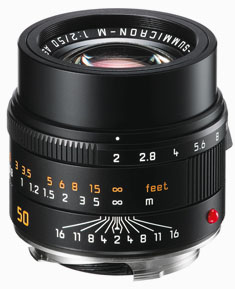
The Leica 50mm APO-Summicron-M ASPH f/2.0 lens |
| |
|
50mm
a) 50mm lens is a lens that has a viewing angle of view is 47° vertically, 40° horizontally and 27° vertically within a 35mm film frame.
b) 50mm lens is often compared to the human eye. Not because of viewing angle but because of size ratio. The 50mm lens is the lens that comes closest to the size that the human eye see things (whereas the human eye has a much wider angle of view [120-200°] than the 50mm lens [47°], thought a more narrow focus (your eyes may observe very wide but your focus is on a limited view within that angle of view).
AF = Auto Focus. The idea is that the camera does the focusing itself (the word auto comes from Greek "self").
Aperture = (also written as f/) = The metal blades inside a camera lens that regulates how much light passes through the lens. On a f/1.4 lens, the lens is "fully open" at f/1.4. At f/2.0 the aperture inside the lens make the hole through the lens smaller so only half the amount of light at f/1.4 passes through. For each f/-stop (like f/4.0 - f/5.6 - f/8.0 - f/11 - f/16) you halve the light. The f/ fundamentally means "f divided with": The aperture of the lens is basically the focal length divided with the f/-stop = size of the hole (50mm divided with f/2.0 = the hole is 25 mm in diameter, or 50mm at f/1.4 is 50mm divided with 1.4 = the hole throug is 36mm. ). ORIGIN: Late Middle English : from Latin apertura, from apert- ‘opened,’ from aperire ‘to open’.
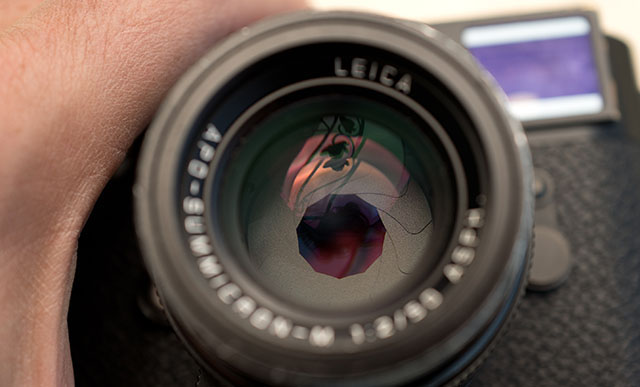
The aperture blades inside the lens is clearly visible in this photo.
| |
 |
| |
The camera in Aperture Priority Mode |
| |
|
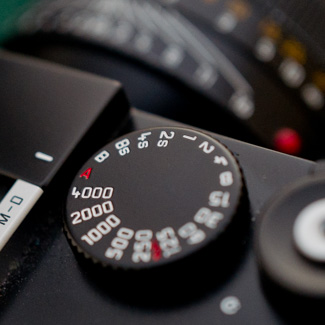
Aperture Priority Mode. When the shutter speed dial on top of a Leica camera is set to A, it is short for “Aperture Priority” and allows the user to set a specific aperture value (f-number) while the camera selects a shutter speed to match it that will result in proper exposure based on the lighting conditions as measured by the camera's light meter. In other words, you set the aperture as priority (f/1.4 for example), and the camera calculates a shutter speed (1/250 of a second) that matches that. If you change the aperture to f/2.0 by changing the aperture ring on the lens, the camera will re-calculate the speed to 1/125 so as to get the same amount of light to hit the sensor (f/2.0 is half the light through the lens as f/1.4 and 1/125 if twice the amount of light on the sensor as 1/250).
APO = stands for "apochromatically corrected". In most lenses, optical design concentrates the focus of blue light and green light into a single plane, but red light falls slightly into another plane of focus. Red subjects, therefore, would be ever so slightly out of focus compared to blue and green subjects in the same frame. Not sure you'd ever notice though, the difference is so slight. This is the same basic principle that requires you to shift the focus for infrared photography, related to the wave length of red light. In APO lenses, the design and expense has been put in to making red light focus on the same plane as blue and green. Under a microscope you would see that all light subject is now in focus, creating a sharper image overall. Many manufacturers offer APO designs, but in most of these only the very center of the lens is APO corrected. Leica prides itself on making most of the frame APO correct.
If one look at the images produced by the APO lenses (Leica 90mm APO-Summicron-M ASPH f/2.0, the Leica 50mm APO-Summicron-M ASPH, and the Leica 50mm Summilux-M ASPH f/1.4 that is in fact APO-corrected), one will notice that the colors are really bright and alive, almost more real than to the eye.
Apochromat; ORIGIN early 20th century, made of the two words;
apo: Greek origin, away from
chromatic (Latin origin, meaing relating to color.
ASPH = (Aspherical lens) stands for "aspheric design".
Most lenses have a spherical design - that is, the radius
of curvature is constant. These are easy to manufacture by
grinding while "spinning" the glass. This design
however restricts the number of optical corrections that can
be made to the design to render the most realistic image possible.
ASPH lenses (a-spherical, meaning non-spherical), however, involve usually 1 element that does
*not* have a constant radius of curvature. These elements
can be made by 1) expensive manual grinding, 2) molded plastic,
or 3) Leica's patented "press" process, where the element
is pressed into an aspherical ("non-spherical")
shape. This design allows Leica to introduce corrections
into compact lens designs that weren't possible before. Practically,
the lens performs "better" (up to interpretation)
due to increased correction of the image, in a package not
significantly bigger than the spherical version.
There is another Aspherical lens manufacture technique: an uneven coating layer is applied to a spherical lens. The coating is thicker on the edges (or on the center, depending). Canon "Lens Work II" calls these "simulated" aspherical lenses. Simulated and Glass-Molded (GMo) asphericals show up in non-L Canon lenses, while the L lenses have actual ground aspheric elements.
A- means non, or without. From Latin, ex.
Sphere: ORIGIN Middle English : from Old French espere, from late Latin sphera, earlier sphaera, from Greek sphaira "ball".
| |
|
|
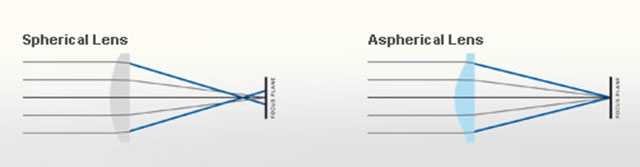 |
| Normal spheric lens (grinded) |
|
ASPH (note the shape of the glass as result of pressing rather than grinding) |
Auto- means “self”. The idea is that when a camera has auto-(something), it does that (something) by itself.
Banding = Noise in digital images. Horizontal lines in a horizontal picture (if the camera is in portrait mode/vertical, the lines will obviously be vertical). It's simply noise; the result of uncontrolled algorithms working overtime with an image the sensor really can't see because it's very dark. (If your image has vertical lines in it, it is more likely that the sensor needs remapping).
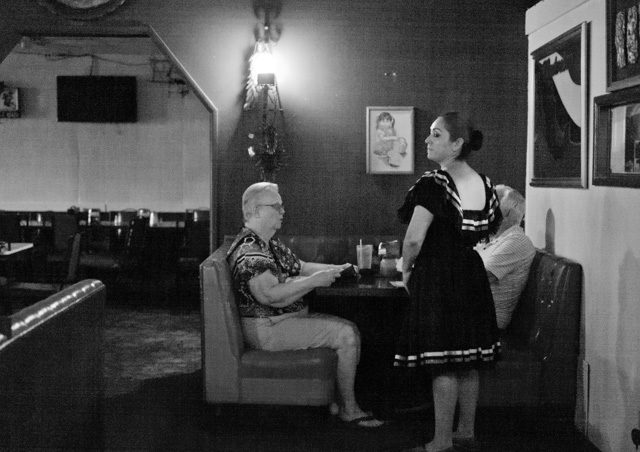
This image at 6400 ISO, underexposed and then brought up to correct exposure in Lightroom, displays banding: Horizontal lines in the image. Leica M-D 262 with Leica 50mm APO-Summicron-M ASPH f/2.0.
Base ISO = The ISO the digital sensor was born with. Even a digital sensor goes from say 50 ISO to 25,000 ISO, it only has one base ISO. Any other setting is an algorithm that figures out how the image whould look if there was 64 times more light, or half the light, etc.
When you go down from Base ISO (for example 200 to 100 ISO), you can expect a
decrease in quality. When you go up, the decrease is much less. For some sensors, you loose 2-3 stops by going down 1 step in ISO, but can go 8 steps up and only loose 1 stop in dynamic range. Basically, your ISO range should be from Base ISO and as far up as you can, before you see visible decrease in quality (mostly 3200 ISO - 6400 ISO).
Base ISO for Leica M9 is 160 ISO, for Leica M240 it is 200 ISO. For Leica M10 it is around 160 ISO. For Leica M Monochrom it is 320 ISO. For Leica Q and Leica Q2 it is around 100 ISO. For Panasonic Lumix S it is 200 ISO. For most Canon cameras the base ISO is around 100, for most Nikon cameras it is around 200 ISO.
Bokeh = The visual quality of the out-of-focus areas of a photographic image, especially as rendered by a particular lens: It's a matter of taste and usually photographers discuss a 'nice' or 'pleasant' bokeh (the out-of-focus area is always unsharp, which is why the quality discussed is if one likes the way it renders or not by a particular lens). The closer you get to something, the 'more' bokeh' you get (in that the focus becomes less for the background and foreground at close distances than at long distances). ORIGIN from Japanese 'bo-ke' which mean 'fuzzines' or 'blur.'.
 Bokeh: The visual quality of the out-of-focus areas of a photographic image. Photo at Bar del Fico in Rome. Leica TL2 with Leica 35mm Summilux-TL ASPH f/1.4. © 2017 Thorsten Overgaard. Bokeh: The visual quality of the out-of-focus areas of a photographic image. Photo at Bar del Fico in Rome. Leica TL2 with Leica 35mm Summilux-TL ASPH f/1.4. © 2017 Thorsten Overgaard.
C = Continuous shooting. When the ring by the Shutter Release on top of the camera (or in the menu of digital cameras that doesn't have such a feature on the outide of the camera) is moved from OFF to C, the camera takes series of images as long as the shutter release is pressed down. In some cameras the speed of continious shooting can be adjusted.
Camera - is today’s short name for Camera Obscura (meaning “a dark room”). Camera means Chambre and was used only as a Latin or alien word, actually only for Spanish soldiers’ rooms, until popularized in connection with photography in 1727: “Camera Obscura”. In 1793 the slang term “camera” was used by Sterne Tr. Shandy: “Will make drawings of you in the camera” and by Foster (1878), “The eye is a camera”. Camera Obscura was described by Iraqi scientist Ibn-al-Haytham in his book, “Book of Optics” (1021) and by Leonardo da Vinci in 1500; popularized and made widely known in 1589 by Baptista Porta when he mentioned the principle in his book “Natural Magic”. Johannes Kepler mentions Camera Obscura in 1604.
Camera = chambre (room), Obscura = dark (or cover).
| |
|
|
| |
Why is it called a "camera"..?
The word Camera is today's short name for Camera Obscura (which originally means “a dark room”).
Origin of the word Obscura means "dark" or "covered", and the word Camera means Chambre and was used originally only as a Latin or alien word, actually only for Spanish soldiers' rooms, until popularized in connection with photography in 1727: “Camera Obscura”.
In 1793 the slang term “camera” was used by Sterne Tr. Shandy: “Will make drawings of you in the camera” and by Foster (1878), “The eye is a camera”.
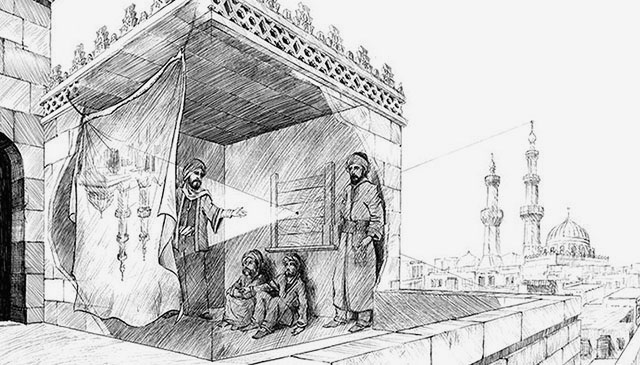
Ibn-al-Haytham mentioned Camera Obscura in his "Book of Optics" in 1021.
The concept of Camera Obscura was described by Iraqi scientist Ibn-al-Haytham in his book, “Book of Optics” (1021) and by Leonardo da Vinci in 1500; popularized and made widely known in 1589 by Baptista Porta when he mentioned the principle in his book “Natural Magic”. Johannes Kepler mentions Camera Obscura in 1604.
Camera = chambre (room), Obscura = dark (or cover). |
|
| |
|
|
CCD sensor = (as used in Leica M8, M9, Leica S) = (Charged Coupling Devices) - The first digital cameras used CCD to turn images from analog light signals into digital pixels. They're made through a special manufacturing process that allows the conversion to take place in the chip without distortion. This creates high quality sensors that produce excellent images. But, because they require special manufacturing, they are more expensive than their newer CMOS counter parts.
Central Shutter = Some lenses, for example the Leica S lenses and the Leica Q where a shutter is located in the lens itself. In most cameras there is a shutter curtain just in front of the sensor, and in SLR (Single Lens Reflex) cameras there is also a mirror in front of the shutter curtain.
In the Leica T/TL/TL2 the shutter is in front of the sensor, but only acts to "refresh" the sensor. In the Leica TL2, there is a mechanical shutter curtain from 30 sec. to 1/4000 shutter times, and digital shutter from 1/4100 to 1/40,000 shutter times. A digital shutter is simply "turning on/off the recording of the sensor.
CLA
An acronym for "(C)lean, (L)ubricate & (A)djust", whereby the item is merely re-lubricated, fine-adjusted and calibrated rather than repaired. "I just got my equipment back from CLA at Leica"
CMOS sensor (as used in Leica M10, Leica CL, Leica LT/TL/TL2, Leica SL, Leica Q, Leica X, Leica D-Lux, etc.)
= (Complimentary Metal Oxide Semiconductor) chips use transistors at each pixel to move the charge through traditional wires. This offers flexibility because each pixel is treated individually. Traditional manufacturing processes are used to make CMOS. It's the same as creating microchips. Because they're easier to produce, CMOS sensors are cheaper than CCD sensors. CMOS allow Live View and use less energy than CCD.
Contrast - The degree of difference between tones in a picture. Latin contra- ‘against’ + stare ‘stand.’
Depth - Distance between front and back. Distance from viewer and object.
Digital Shutter = A digital shutter is simply "turning on/off the recording of the sensor. In the "old days" this had to be done with an actual mechanical shutter curtain; a metal curtain in front of the sensor (or film) that goes up for 1/125th of a second, for example. In the Leica TL2, there is a mechanical shutter curtain from 30 sec. to 1/4000 shutter times, and digital shutter from 1/4100 to 1/40,000 shutter times.
Digital Zoom = In some cameras (but not the Leica TL2), there exist a possibility to enable "digital zoom", which basically means the camera can zoom closer into something than the lens is actually designed to. The way digital zoom works traditionally is that the camera simply crops the picture; so you get closer, but without resolution. In other words, it's the same as if you took a normal photo and then cropped into the center of it.
DIS = Digital Image Stabilization. This is a feature often offered in video recorders and sometimes for tele lens still photography (so as to avoid motion blur when the lens is moving during slow shutter speeds).
| |
 |
| |
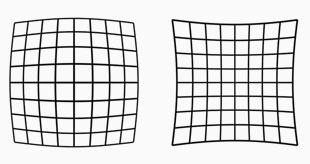
Lens distortion looks like this. The lines are not straight. Our eye uses distortion correction. Lens designers can design lenses so they have very little distortion, or they can make less complicated lens designs and "fix" the distortion in software. |
| |
|
Distortion = In photo optics/lenses: When straight lines in a scene don't remain straight because of optical aberration.
Lens designers can correct for distortion to a degree so the whole image field is perfect corrected and all lines remain straight. In modern lens design many designs rely on Software Distortion Correction (SDC).
The eye adjusts for distortion so we always see vertical and horizontal lines straight when we look at things. Even when you get new prescription glasses (if you use such), you will often experience distortion in your new glasses. After a few days they eyes have adjusted for the glasses and the distortion you saw to begin with is now gone. Software Distortion Correction (SDC) is far behind what the human eye can perform of adjustments. (Also see my definition on Perspective for more on the eye and optics)
DNG = Digital Negative, an open standard developed by Adobe. It is a single file that contains the raw image data from the sensor of the camera as well as date, time, GPS, focal length, settings, etc.
The alternative is a RAW file + XLM file where the RAW file contains the image information and the XML contains the rest of information about where, how and when the picture was taken.
A Camera Raw profile (that is specific for that camera) in the computer helps the software program, for example Adobe Lightroom, to translate the RAW data into the image.
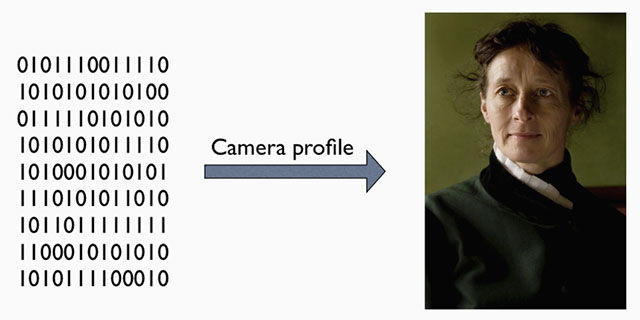
A raw file (or DNG) is simply the full recording of digital data (1's and 0's) from the sensor. In the computer, the sensor data is translated into the exact colors, via a camera profile.
Depth - Distance between front and back. Distance from viewer and object.
DOF = Depth of Field. This is how much of the image will be in focus. Shallow DOF is a generally used term in photography that refer to lenses with very narrow focus tolerance (which can be used to do selective focus; for artistic reasons or for specific storytelling, like making irrelevant subjects in the foreground and background blurry so only the subjects of essence are in focus and catches the viewers eye).

Depth of Field: Focus is on the flowers and the photograph on the desk and the foreground and background is blurred as the depth of field is narrow. If one stop down the aperture of the lens from f/1.4 to f/5.6, more will be in focus. If one stop down the lens to f/16 even more (if not all) will be in forcus. Another rule: The closer you go to a subject (the less focusing range), the more narrow the Depth of Field will be. © 2017 Thorsten Overgaard.
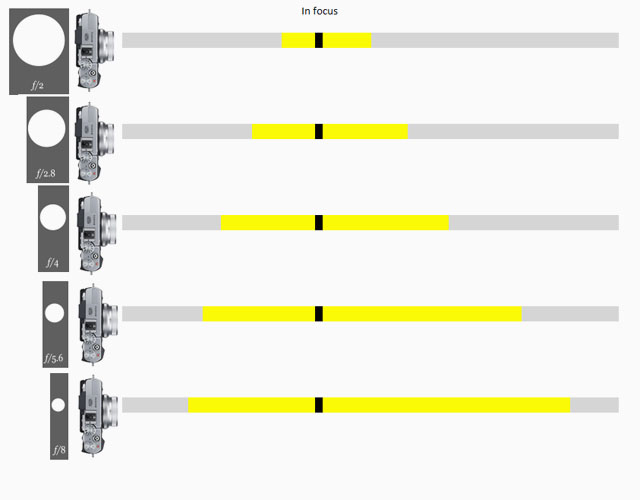
Depth Of Field scale from Fujifilm.
Dynamic range. The grade of ‘contrast range’ (or number of tones) a film or sensor, or simply a photograph, possess between bright and dark tones. The human eye is said to have a dynamic range of 10-14 ‘stops’ (but because we scan area by area and compile a concept of the overall scene, they eye is often thought to have a much higher dynamic range), Film used to have 7-13 ‘stops’ and some modern sensors have up to 15-17 ‘stops’.
Elmar = Refers to the maximum lens aperture - here f3.5 . Historically derived from the original 1925 50mm f3.5 Elmax lens, which was an acronym of (E)rnst (L)ieca and Professor (Max) Berek, designer of the original lenses. Later that year the 50mm f3.5 Elmar superceded the Elmax, which was discontinued due to its complexity and high cost of manufacture.
Elmarit = Refers to the maximum lens aperture - here f2.8 . The name is obviously derived from the earlier (and slower) "Elmar" designation. Not every f/2.8 lens is called an "Elmarit" though, the most obvious current exception being the 50mm f2.8 Elmar-M collapsible lens which for nostalgia and marketing reasons has kept the original 1930's Elmar name (the 50mm f3.5 collapsible Elmar, manufactured 1930-59, was one of Leica's most famous and popular lenses).
Elmax
Elmax lens named after = Ernst Leitz + Max Berak. Ernst Leitz was the founder of Ernst Leitz Optical Industry which later became Leica. Professor Dr. Max Berak was employed at Leica in 1912 and was the architech of the first Leica lens which Ernst Leitz asked him to design for the "Barnack's camera" (the 1913-prototype named after Oscar Barnack who invented it). The lens was a f/3.5 50mm and was known as the Leitz Anstigmat and later the Elmax.
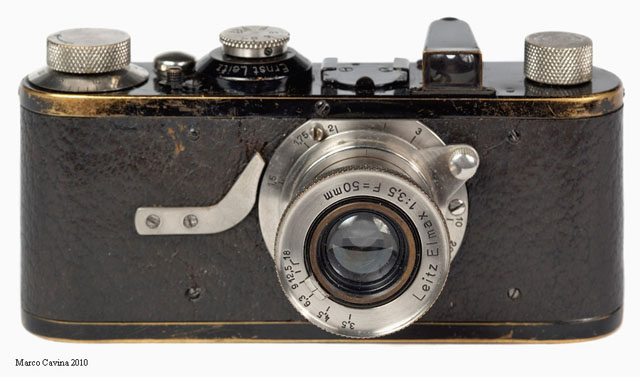
The Leitz Elmax 50mm f/3,5 (1925-1961) on the Leica A camera (1925) camera. Photo by Marco Cavina.
EVF = Electronic ViewFinder. The Leica M10 and the Leica T/TL/TL2 uses the Leica Visoflex model 0020.
Exposure Bracketing = The possibility to set the camera to automatically record a series of images where the exposure is above and below what the camera measures. The idea is that at least one of the images will be correctly exposed.
f/ (f-stop, also known as aperture).
f- (focal length). Often given in mm, for example 90mm. In the past they were often given in cm or inch, for example 9.5 cm or 3.2 inch.
f/1.25 is the size of the "hole through" the lens, the aperture. f/1.25 means focal length divided with 1.25. In the Leica 75mm NoctiluxM ASPH f/1.25, the "hole through" the lens at f/1.25 is 60mm in diameter. At f/1.4 the "the hole through" is 53.5mm in diameter. At f/4 the "hole through" is 18.75mm in diameter.
Each step smaller from f/1.4 to f/2.0 to f/2.8 to f/4.0 and son on is a reduction ofthe light to half for each step. The Noctilux f/1.25 therefore lets 50% more light in through the lens than a 75/1.4 Summilux.
f-stop = the ratio of the focal length (for example 50mm) of a camera lens to the diameter of the aperture being used for a particular shot. (E.g., f/8, indicating that the focal length is eight times the diameter of the aperture hole: 50mm/8 = 6,25 mm); or the other way around, the hole is the focal length divided with 8).
ORIGIN early 20th cent.: from f (denoting the focal length) and number.
One f-stop is a doubling or halving of the light going through the lens to the film, by adjusting the aperture riing. Adjusting the f-setting from f 1.4 to f.2.0 is halving the light that goes through the lens. Most Leica lenses has half f-stops to enable the photographer to adjust the light more precicely.
Flare = Burst of light. Internal reflections between (and within) lens elements inside a lens. Mostly, flare has a characteristic "space travel" look to it, making it cool. Particularly in older lenses with less or no coating of the glass surfaces to suppress this, it can be a really cool effect. In newer lens designs, the coatings and overall design try to suppress flare and any reflections to a degree, so that there is seldom any flare to be picked up (moving the lens to pick up a strong sunbeam), but instead a "milking out" (or "ghosting") of a circular area of the frame; meaning simply overexposed without any flare-looking flares.
 |
|
 |
Sunlight creating (fairly supressed) flare in the bottom right quadrant of the image of a modern lens. |
|
The camera moved slightly to avoid the flare. |
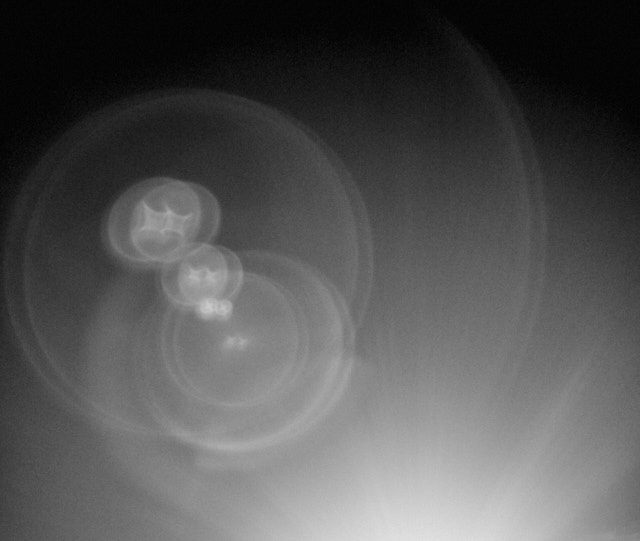
Older lenses with less coating, or without coating, are known to create flare that can look like this (Leica 50mm Summicron-M f/2.0 II Rigid model from the 1960's). © Thorsten Overgaard.
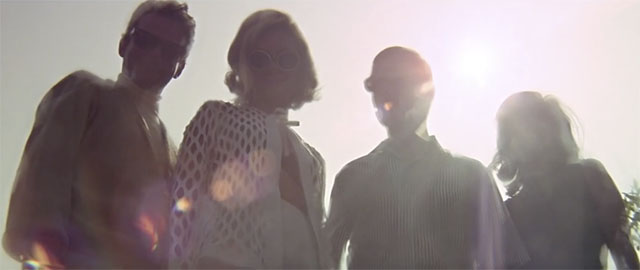
Lens flare in the movie, The Graduate (1967).
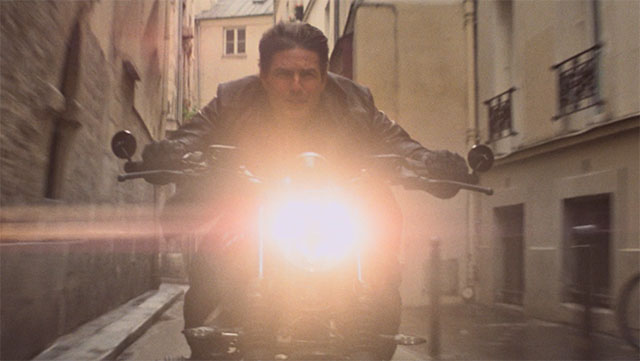
Lens flare in Mission Impossible Fallout (2019)
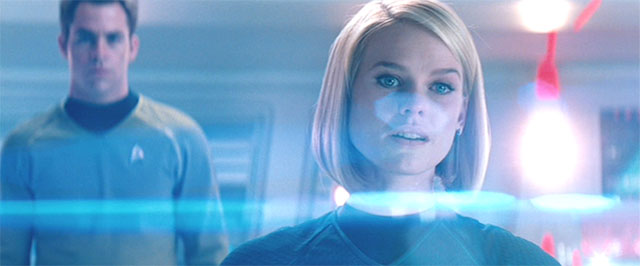
Lens Flare in Star Trek (2013). JJ Abrams famously said, "I know there's too much lens flare ... I just love it so much. But I think admitting you're an addict is the first step towards recovery (ha ha)"
|
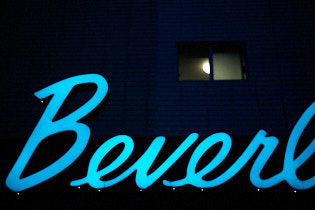
Flickering = blinking light. This may result in "banding like" horizontal stripes in an image, or simply that the light you see isn't in the picture, or it looks different. For example, you take a photo in light, and the result you get is darker. You take another, and now it is all right. The reason is that some light blinks. Here's the difference within one second (notice how the light in the room, the wall light and the sign light all flicker):
 |
|
 |
| |
|
|
 |
|
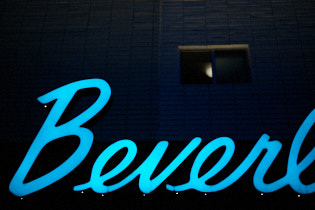 |
Flickering light causing different result in each frame becasuse the light blinks faster than the eye sees, but slow enough to be caught on camera. Here at shutter time 1/1500 sec, four pictures within a second.
Often you will see that you take a portrait indoor in an office, and from frame to frame the person has shade on one side of the face in one photo, but not the next. |
| |
|
|
Flickering ligh is a new challenge that photographers face, which is flicering light that looks good to the eye, but result in different results in a photo. Through cinema and photography history, the three standard high-quality light soruces have been daylight (from the sun), daylight HMI (5400 Kelvin Hydrargyrum medium-arc iodide lamps) and tungsten lamps (3200 Kelvin). When I say high-quality, it's because those are the light types that ensure high color quality (see the definition of CRI - Color Rendering Index in my "Leica and Photography Definitions page") and how quality light traditionally has a score above 90 CRI).
In recent years we have seen "light that flickers" because it has a pulse, such as stage light, photo lamps, video lights and of course indoor and outdoor late night lamps using LED (Light-emitting diode), compact fluorescent lightbulp-shaped lamps and other low-energy lamps (such as halogen). These light also generally have lower CRI (Color Rendering Index) below 90, and even lamps that are stated to have 90 CRI or higher, may mis out on the important red and blue tones, which will make it impossible to get the colors right, espoecially skin tones). If a stage has one or more low-quality lights (which they thend to have), these will pollute the colors of the scene to some degree.
| |
 |
| |
Banding as result of electronic shutter, and often also if the ISO is high. |
Flickering horizontal stripes (or "banding"-looking stripes) may appear when you use electronic shutter, and you are photographing with one or more light sources that flickers.
When the electronic shutter is on, you are usually at higher shutter speeds than 1/2000, which means there it would be possible to go down to a lower ISO, and to activater the mechanical shutter. (In some cameras you can choose to use electronic shutter throughout the entire range, which would make the camera completely silent; and this alone may cause horizontal stripes/banding if one or more lights in the room flickers).
Fn = Short for Function. It's a button you can program. On the Leica M10 has a front button that can be programmed to other Fn (Functions).
Focus, in - Sharp and clear in appearance. Focus - “The burning point (of a lens or mirror)”. In Latin the word focus meant fireplace or hearth. The word was probably first employed outside of its Latin literal use as “the burning point of a lens or mirror” in optics, and then came to mean any central point. The German astronomer Johannes Kepler first recorded the word in this sense in 1604.
| |
 |
| |
A 28 mm lens has a 74° viewing angle |
| |
|
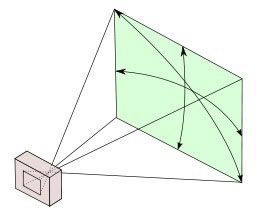
Focal length = (also written as f-) = On the Leica 35mm Summilux-TL ASPH f/1.4 it is 35mm and originally referred to the distance from the sensor (or film in older days) to the center of focus inside the lens. Nobody uses that measurement, except those who construct lenses! For users of lenses, focal length refers to how wide the lens sees. The viewing angle, which is often given in for example 90° viewing angle for a 21mm lens, 74° viewing angle for a 28mm lens, 6° viewing angle for a 400mm lens, etc.
Each human eye individually has anywhere from a 120° to 200° angle of view, but focuses only in the center.
The Leica TL2 has a APS-C sensor, which "crops" the traditional focal lengths with 1.5X, reducing the angle of view of view with 1.5X.
Focus, in - Sharp and clear in appearance. Focus - “The burning point (of a lens or mirror)”. In Latin the word focus meant fireplace or hearth. The word was probably first employed outside of its Latin literal use as “the burning point of a lens or mirror” in optics, and then came to mean any central point. The German astronomer Johannes Kepler first recorded the word in this sense in 1604.
| |
 |
| |
Full Frame is "king of photography" |
| |
|
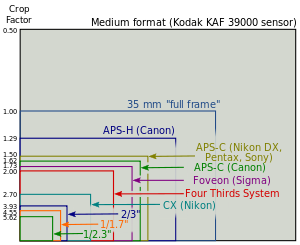
Full Frame (FF) = The size of the sensor is 24 x 36mm which is the format Oskar Barnack and Leica Camera AG invented with the first Leica that was introduced in 1925. Many other formats invented since, such as APS, APS-C and all usually refer to Full Frame ratio, by which it means what size they have compared to Full Frame. The "full frame" technically deifinition thouhg is a sensor that camtures the full frame in one go (as the early sensors as in Leica S1 scanned the image/senor over a period of time).
The 24 x 36mm Full Frame format is so "king of photography" that it has continued to be the ideal for all cameras. Besides this, there exists Large Format cameras such as 4x5" (100 x 125 mm) and Medium Format 6x6 (60 x 60mm amongst other sizes in that area).
Ghosting = Secondary light or image from internal reflections between (and within) lens elements inside a lens. The reflected light may not always be in focus, so overall it looks like a "milked out" image. A subject in focus has brightened patches in front of it that come from reflections inside the lens. the most elementary look of ghosting is when you look in a rear-view mirror in a car at night and you see doubles of the headlights behind you (a strong one and a weaker one), because the headlights are reflected in a layer of clear glass on top of the mirror glass.
 |
|
 |
|
 |
| Degrees of ghosting from strong sunlight entering from outside the frame. To the right the outside light has been shielded with a shade. |
| |
 |
| |
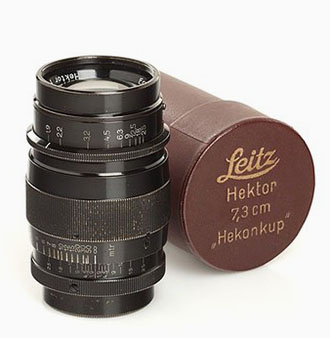
The Hektor 73mm f/1.9 of 1930-1931 sells at $900 - $6,000 these days. |
| |
|
Hektor - Refers to the maximum lens aperture - usually f2.5 (whihc at the time of development in the 1930's was considered very light-strong lenses). The name was apparently taken from the name of lens designer, Professor Max Berek's dog, Hektor. He also had another favorite dog, Rex, which may have inspired the lens name Summarex.
But ...
there is also another possibility, which is that Hektor (the lens and/or the dog) was inspired by Hektor, the oldest son of the Trojan king Priamos, who is listed in the history books as being the most couragerous defender of his home city, Troy. (Max Berek knew of this because Greek history had been required during his high school education).
In any case, the first 50mm Hektor f/2.5 was designed by Max Berek in 1931 for the Leica I Model A, and the - for that time - extremely light-strong 73mm Hektor f/1.9 was designed in 1930-1931 in preparation of the modular Leica system.
ISO = Light sensitivity of the camera sensor is given in ISO (International Organization for Standardization). It's a standard that was used in film and is now used in all digital cameras also. The base ISO for the Leica TL2 sensor is around 100-150 which means that this is what the sensor "sees". All other levels are computer algorithms calculating the effect as if the sensor could "see" more (hence noise at higher ISO levels).
ISO goes in steps of doubling: When the ISO is raised from 100 ISO to 200 ISO, the camera only need half the amount of light to make the same picture. For each step in ISO to 400, 800, 1600, 3200, etc. the light sensitivity is doubled for the sensor (and the camera sensor only need half the light of the previous ISO to record the same image).
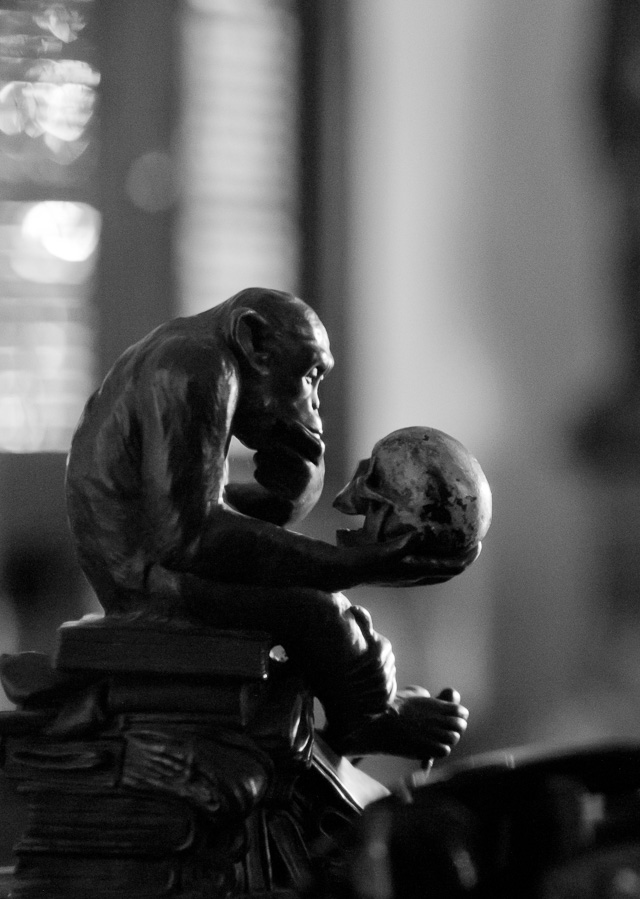
6400 ISO indoor photo. With modern cameras the ISO can go to 3200, 6400, 12,800 and even higher without loss of dynamic range and without digital noise. Leica M10 with Leica 50mm Noctilux-M ASPH f/0.95. © 2017 Thorsten Overgaard.
JPEG = A standard for picture format made in the 1990's by Joint Photographic Experts Group). Mostly referred to as JPG as in L1003455.JPG which would be the name for a JPG file from the camera.
Leica = A compound word derived from " (Lei)tz" and "(ca)mera". Apparently they were originally going to use "LECA", but another camera company already used a similar name in France, so they inserted the 'i' to prevent any confusion.
Lens - A piece of glass or similarly transparent material (like water or plastic). It has a shape so that it can direct light rays. The word “Lens” is used both for single piece of glass as well as a camera lens with several lenses that works together. From ‘lentil’ because similar in shape.
Lens hood = (also called a Lens shade). A tube or ring attached to the front of a camera lens to prevent unwanted light from reaching the lens and sensor. In the past where lenses were not coated to prevent internal reflections inside the lens, the lens hood was often essential. These days where lenses are coated, the shade serves just as much as decoration and protection (bumper) as well.
ORIGIN Old English hod; related to Dutch hoed, German Hut 'hat,' also to hat.
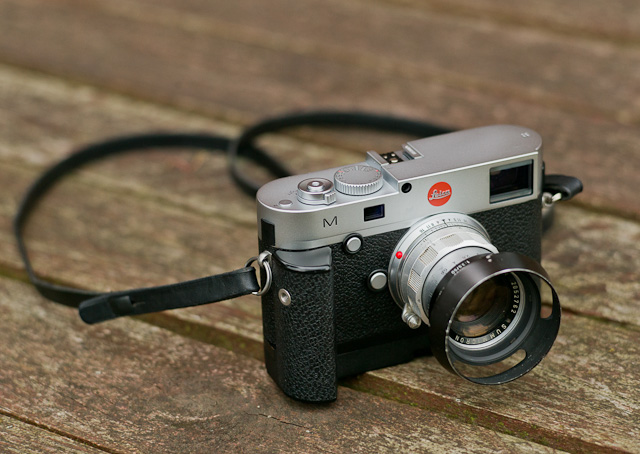
Lens hood or Lens shade attached to the front of the lens to prevent light rays from the side to hit the optics, which could introduce unwanted light and hence reduce contrast of the image. These days where lenses are coated, the shade serves as decoration and protection as well.
Light = Tiny particles called photons that behaves like both waves and particles. Light makes objects visible by reflecting off of them, and in photography that reflecting off of subjects is what creates textures, shapes, colors and luminance. Light in its natural form (emanating from the sun) also gives life to plants and living things, and makes (most) people happier. So far, nobody has been able to determine exactly what light is. The word photography means “writing with light” (photo = light, -graphy = writing). Read more about light in my book Finding the Magic of Light.
Live View = This is the ability to see the image the sensor see, live, via the screen, or via an electronic viewfinder (EVF). This is a later technology than the Leica M9 that does not have Live View (requires a CMOS sensor, and the Leica M9 has a CCD sensor).
M (as in "M3", "M6", "M7" etc.)
A) The M originally stands for "Messsucher", which is German "Meßsucher" for "Rangefinder". The "3" in M3 was chosen because of the three bright line finders for the 50, 90 and 135 mm lenses. Later the numbers of the M cameras were more or less chosen to follow each other.
M-body evolution in chronologic order:
M3 - MP - M2 - M1 - MD - MDA - M4 - M5 - CL - MD-2 - M4-2 - M4-P - M6 - M6 TTL - M7 - MP - M8 - M8.2 - M9 - M9-P - MM (black and white sensor) - ME (Type 220) - Leica M (Type 240) - Leica M-P 240 - Leica M 246 Monochrom - Leica M-A (type 127, film camera) - Leica M 262 - Leica M-D 262 (without a screen) - Leica M10 - Leica M10-P.
B) M also refer to M-mount as the M bayonet that couple the Leica M lenses to the Leica M camera. Before the M bayonet the coupling between the camera and lens was screwmount.
C)
M nowadays refer to the Leica M line of cameras rather than the "Messsucher".
M9
Leica M9 is a model name for the Leica M9 that was introduced on September 9, 2009 (as the first full-frame digital Leica M). It was the latest model designation using the M and a number. From their next model, Leica Camera AG introduced a new model system so each camera would simply be a Leica M but then with a model designation like Typ 240, Typ 246, Typ M-D 262 and so on. The idea was inspired from Apple who name their computers for example MacBook Pro and then it has a sub- model number designation which model it is (and which would define speed of processor, etc).
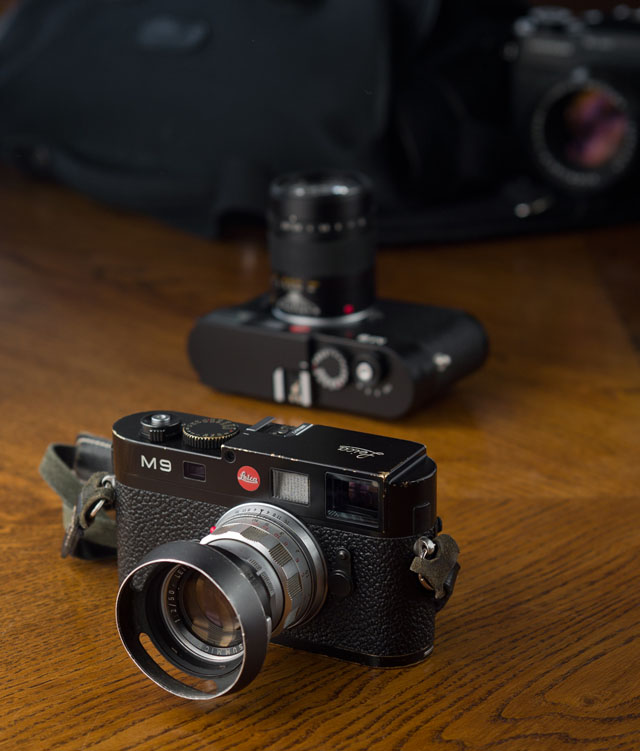
Leica M9
MACRO = Macro lens. The Leica 60mm APO-Elmarit-Macro ASPH f/2.8 is both a 60mm lens for portraits, landscapes, etc. as well as a near focus macro. The word macro comes from Greek makros ‘long, large.’

The word macro comes from Greek makros ‘long, large.’ © Thorsten Overgaard.
Mandler, Dr. Walter (1922 - 2005)
Legendary Leica lens designer and CEO of Ernst Leitz Canada (ELCAN) 1952-1985. Read more in Leica History.
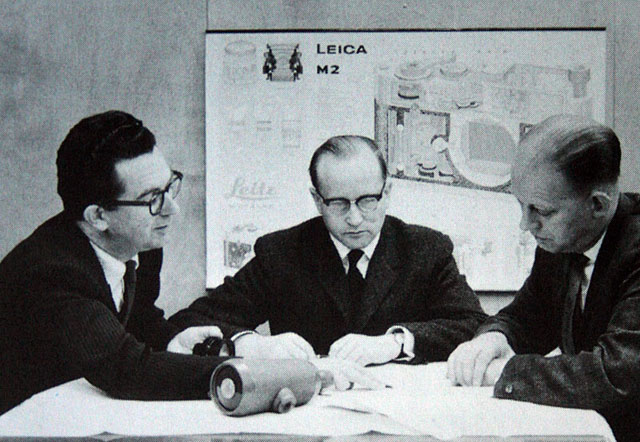
Dr. Walter Mandler (center) at the Ernst Leitz Camera factory.
Megapixel (or MP) - Millions of pixels. See pixel further down. How many units of RGB is recorded by a given sensor by taking height x widt. A Leica M10 delivers a 5952 x 3968 pixel file = 23,617,536 piexls. On a screen the resolution you choose determines the size of the image. Say you have a 5000 pixel wide file and your screen is set for 8000 pixels wide. Then the image will fill only the 5000 pixels fo the 8000 and the rest will be empty, If you then change the screen resolution to 5000 wide, the image would be able to fill out the whole screen.
Meßsucher = (rangefinder or distance finder) = Mess = range, sucher = finder. It is always correctly written with the "ß". There are technically not three "s", rather the "ß" and one "s" because it is a word constructed by the combining of two precise words.
MF (Manual Focus) for lenses that are focused by hands, as opposed to Auto Focus.
mm = millimeter(s), as in a 50mm lens. (Earlier in lens history lenses focal length was given in cm = centimeters; as in a 5 cm lens). For anyone used to centimeters and millimeters, it’s no wonder. But if you grew up with inches, feet and yards, you may have had a hard time grasping what a 50mm lens was. But as lenses were designed first in Europe, the metric system with centimeters and millimeters was used to describe lenses.
The reason a 50mm lens is a 50mm lens is that there is 50mm from the focus plane (the film or sensor) to the center of focus inside the lens. When photography was a young subject, it was engineers who made it all, and the users were expected to understand. The engineers were so into the making of the lenses, that it apparently never dawned upon them that today’s users would think of a 21mm lens as a wide angle lens rather than a lens where there is 21mm from the sensor to the center of focus inside the optics.
MP
a) Stands for Mechanical Perfection, as in the Leica M-P.
b) Megapixels (millions of pixels).
c) Megaphotosites (millions of photosites).
ND
Neutral Density filters are grey filters function as 'sunglasses' for lenses. They simply block the light so that a lens can work at for example f/0.95 or f/2.0 in sunshine.
If a camera is set to 200 ISO and the maximum shutter speed is 1/4.000, this will usually result that the lens has to be at f/2.8 or smaller aperture in sunshine. Else the image will over-exposed. So in order til stay within the maximum shutter speed of 1/4.000 and still use a lightstrong lens wide open, one mount a ND-filter that reduce the light with 3 stops (8X) or 6 stops (64x).
For video ND-filters are used quite a lot (as the shutter speed for video is 1/60), and ND-filters are also used to reduce the light for really long multi-exposures at night (stop-motion video and stills).
ND-filters also exist as variable ND-filters so one can adjust the amount of light going through from for example 1 stop (2X) to 6 stops (64X).
ND-filters also exist as graduated ND-filters where the top of the filter is dark and then gradually tone over in no filter (so as to reduce the skylight in a landscape for example).
The ND filters are called Neutral because it is a neutral filter. It doesn't change colors, only the amount of light.
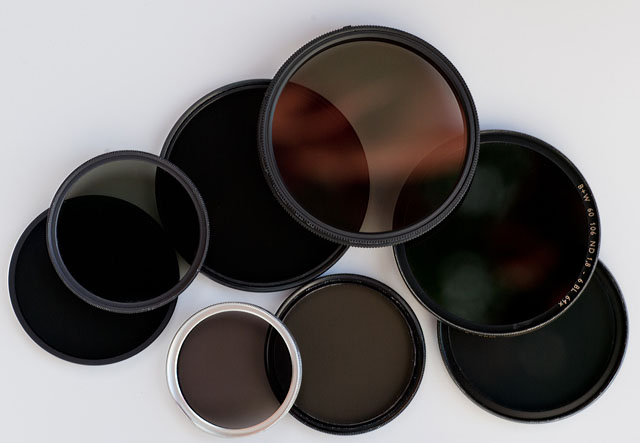
ND-filters / gray-filters.
Noctilux = Also known as "King of the Night" because "Nocti" means Night and "Lux" means Light. The f/1.0 lenes from Leica are named "Noctilux". The first Leica Noctilux lens was the 50mm Noctilux f/1.2 which shortly after it's introduction was improved to the 50mm Noctilux f/1.0. In the current model the f-stop has been improved further to f/0.95.
"Noctilux" refers to the maximum lens aperture - here f1.0 . "Nocti" for nocturnal (occurring or happening at night; ORIGIN late 15th cent.: from late Latin nocturnalis, from Latin nocturnus ‘of the night,’ from nox, noct- ‘night.), "lux" for light. The Leica Noctilux 50mm f1.0 is famous for enabling the photographer to take photos even there is only candleligts to lit the scene. See the article "Noctilux - King of the Night"
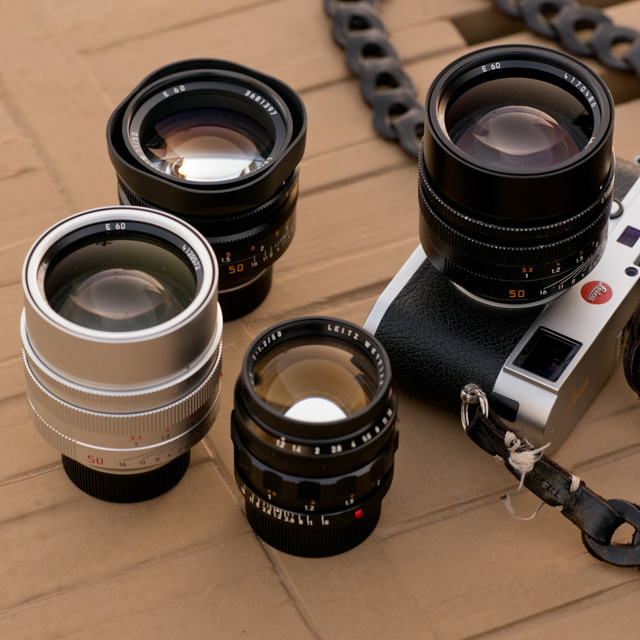
The Noctilux "King of the Night" lens. From left the f/0.95 in silver (same on the camera, in black), the f/1.0 in the back and the rare and expensive first model, the f/1.2 in the front.
Optic = Eye or vision. From French optique or medieval Latin opticus, from Greek optikos, from optos ‘seen.’
Perspective = The way objects appear to the eye; their relative position and distance. Also, selective focus (foreground and background out of focus) can change the perception of perspective (also see Three-dimensional). A wide angle "widens" the perspective and makes objects further away appear smaller than they are to the eye; and objects closer, relatively larger than they are to the eye. A tele lens will "flatten" the perspective and often objects further away will appear relatively larger than close objects than they are in real life. A 50mm lens is the one closest to the perspective and enlargement ratio of the human eye.
The word Perspective comes from the latin word for optics (perspicere, per- ‘through’ + specere ‘to look’), and so-called Renaissance painting is simply painting done within the framework of optics and the linear perspective it presents.
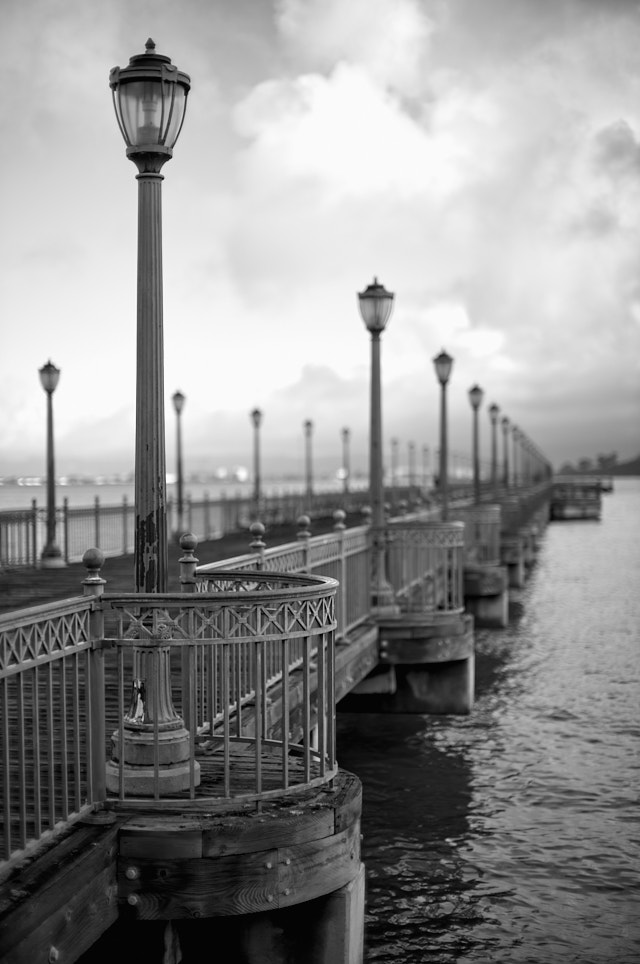
Perspective is relative position and distance. The objects nearby are larger than objects far away. This is how the eye and the mind calculate distance. The eye and the camera automatically captures perspective. In darwing and painting one would see "stupid" two-dimensional drawings 500 years B.C where elements were thrown into the mix without considering that a an object far away must be smaller than if close to the viewer. The word "perspective" comes from "to look through (optics)". Pier 7 in San Francisco by Thorsten Overgaard. Leica M11 with Leica 50mm Noctilux-M ASPH f/0.95.
| |
 |
| |
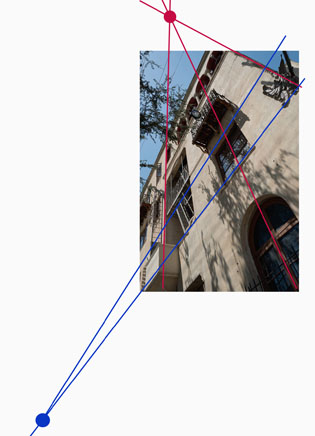
Vanishing points are the points where lines meet. This is how you make perspective in paintings and drawings (and some times make movie sets or theatre stages appear more three-dimensional than they are) |
| |
|
Painters works with vanishing points, which is where the lines meet, so as to create an illusion of perspective and three-dimensional effect on a two-dimensional painting or drawing.
The human eye corrects for perspective to an extreme degree. We always see vertical lines vertical and horisontal lines horisontal: The eye has a angle of view equivalent to an 8mm wide angle lens, a size ratio equivalent to a 50mm lens and we focus on relatively small area of the viewing field - one at the time. Three things happens that are worth paying attention to:
1) We compile areas of our view that we focus on, to one conceptual image that "we see". Ansel Adams, the great American landscape photographer pointed out that a large camera used for landscape photography capture every detail in focus and sharp so you can view it in detail after; but the eye does not see everything in focus when you try to compose the landscape photography, the eye scans only one part at a time and stitch the idea together. This makes composing or prevision of a landscape photography challenging.
2) We compile areas of our view that we individually adjust the exposure of. A camera adjust the exposure of the whole image frame to one exposure. That's why what looks like a nice picture to the eye of houses in sunshine with a blue sky above, becomes a photograph of darker buildings with a bright white sky: The camera simply can't take one picture that compare to what we "compiled" with our eyes, adjusting for each type of light.
3) Objects (on a table, for example) in the bottom of our viewing field will appear 100% perspective corrected - to a degree that it is impossible to correct in optics, with or without software correction. A wide angle lens, even with little distortion, will exaggerate the proportions of the closet part so it - to the eye - looks wrong.
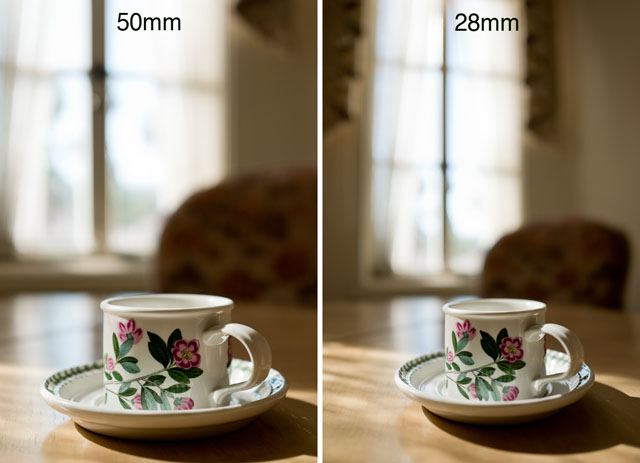
Perspective distortion: Comparing these two photographs you can see how the cup stretches in the 28mm wide angle photograph compared to the 50mm photograph. Both actually has a little stretch because both the cup is in the edge of the frame in both photographs. © Thorsten Overgaard.
Perspective correction - In software like Adobe Lightroom and Capture One Pro there is often a feature to correct perspective (and distortion) like seen below. You can change perspective this way, or at least make believe: If you correct a tall building on teh vertical lines, you will notice that the height of the windows doesn't match the perspective. If the building is with straight lines, the windows should all be of the same size. But a tall building seen from below and corrected with software will have taller windows (closer to camera) in the bottom than in the top (further away from the camera originally).
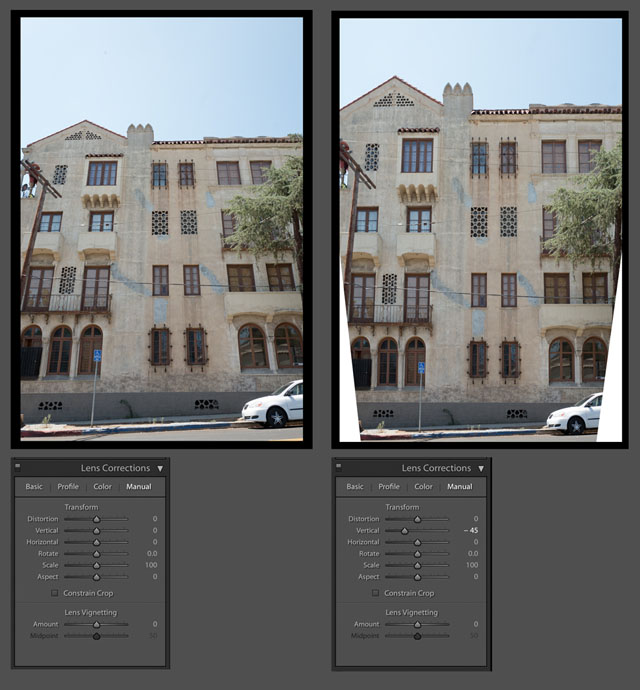
Perspective correction in Adobe Lightroom. © 2017 Thorsten Overgaard.
Photosite - The unit in a digital camera sensor that records intensity of either red, green or blue. Unlike the output of a sensor, measured in pixels (and where each pixel contains RGB), the photosite records only one color each, and it's intensity (how bright it is). A photosite can not distinguish colors, which is why there is a Color Filter Array (basically a prism) above them to filter the colors and send information to the photosite if 's a R, G og B color. See illustration below. In a monochrome sensor (as in the Leica M Monochrom and the Phase One Achromatic), all photosites are recording intensity of light only as there is no concern which color it is, and there is no color filter.
The ratio of photosites to pixels is not a given. Each block of 4 contiguous photosites contains one photosite sensitive to low wavelengths (blue), one photosite sensitive to high wavelengths (red), and two identical photosites sensitive to medium wavelengths (green). So four photosites would be the minimum to create one 'full-color' pixel. Apart from that, depends on the sensor specifications, which is different from brand to brand. Sometimes four photosites (two Green, one Red and one Blue) makes up one pixel, at other times it's more photosites to one pixel; and there is also pixels sampled from photosites across (sort of overlapping patterns).
Pixel - Made up word from Pix (picture) and el (element). A pixel is the smallest full-color (RGB) element in a digital imaging device. The physical size of a pixel depends on how you've set the resolution for the display screen. The color and tonal intensity of a pixel are variable, meaning that each pixel contains RGB. This is different from a camera sensor's small eyes (photosite) that are an intensity of either red, green or blue. You could say that the digital sensor's photosite (where each unit collects just one color; red, green or blue) is the input technology, whereas the pixels on a screen (where each pixel contains red, green and blue) is the output device. So while sensors are measured in megapixels (mega = million), it's their output unit of pixels, and not the input unit of photosites that is measured and stated. See illustration below.
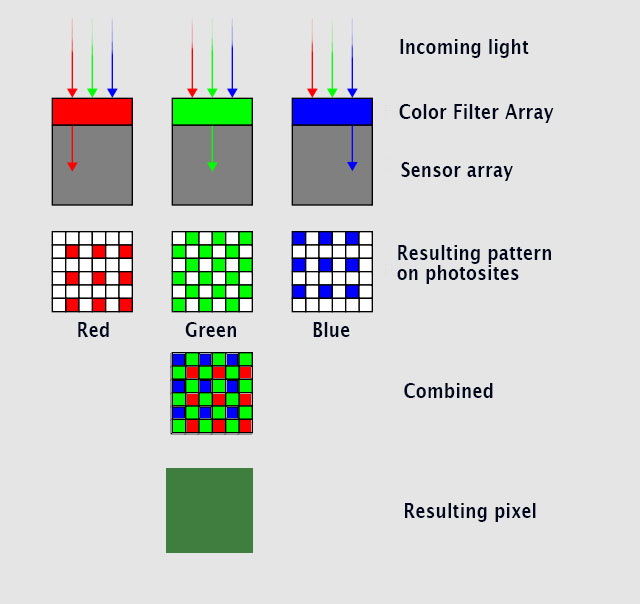
Here's an illustration of how light goes through a color filter that enables the underlying photosites to each record if it';s an R, G or B color - combined - makes up one pixel containing RGB. © Thorsten Overgaard.
S = Single image. In the menu of the Leica TL2 you can choose between single image at the time, or Continuous where the Leica TL2 will shoot series of 20-29 pictures per second as long as you hold down the shutter release. In Single mode it takes only one photo, no matter how long you hold down the shutter release.
Saturation: How colorful, intense or pure the color is. Less saturation would be less colorful, more saturation would be more colorful. In today’s photography, de-saturating a photo on the computer will gradually make it less and less colorful; and full de-saturation would make it into a black and white photo.
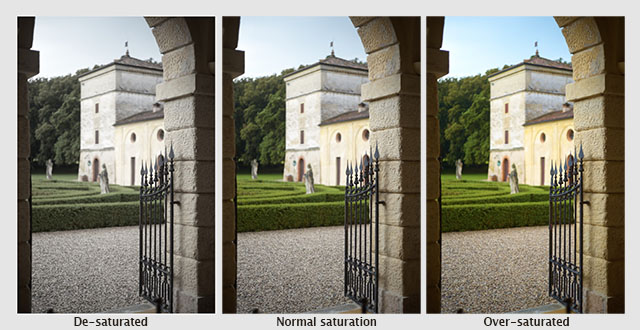
A photo from Verona, Italy de-saturated, normal saturated and over-saturated. © Thorsten Overgaard.
SDC = Software Distortion Correction. A correction of lens distortion (not straight lines) applied in the camera and which is part of the DNG file. In Lightroom the SDC of the camera file is applied automatically (and cannot be removed), in software like AccuRaw one can open the DNG file without the SDC correction. Sean Reid reviews have written a good article on what SDC is and does in "Software Distortion Correction".
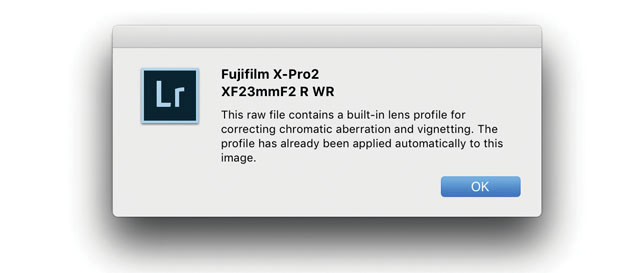
SDC (Software Distortion Correction): In Lightroom the correction profile for the Fujinon 23mm is applied automatically and cannot be turned off. If you go into Develop mode in Lightroom and look under Lens Correction > Profile, you will see a message in the bottom with an exclamation mark. When you click on that, you get the message above.
Sensor = A device that detects a physical property (like light) and records it. A camera sensor is a plane plate with thousands of small “eyes” with a lens in front of each, which each individually records the amount of red, green and blue light rays that comes through the lens. together Red, Green and Blue form all colors of the spectrum. From Latin sens- ‘perceived’
Saturation: How colorful, intense or pure the color is. Less saturation would be less colorful, more saturation would be more colorful. In today’s photography, desaturating a photo on the computer will gradually make it less and less colorful; and full desaturation would make it into a black and white photo.
Sharpness - See “Focus”
Shutter speed dial - The dial on top of the Leica M where you can set the shutter speed manually. It can also be set to A which stands for Aperture Priority (where the camera suggests a shutter speed; or when you move the dial away from A, the camera will show arrows in the viewfinder, suggesting which direction to change the Aperture to, to get the correct exposure).
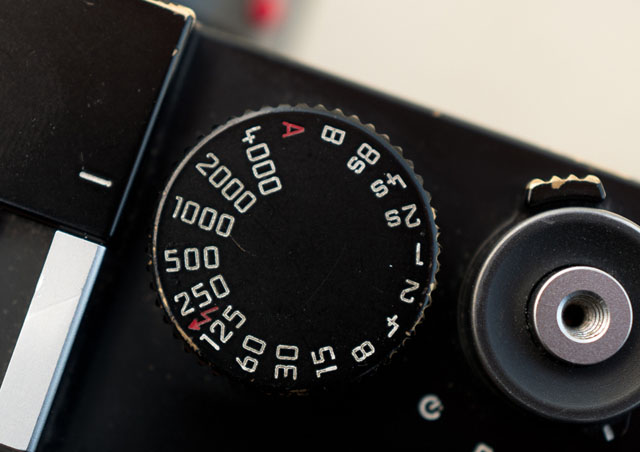
Shutter speed dial set to 1/1000 of a second.
SLR = Abbreviation for Single-Lens Reflex; the lens that forms the image on the film/sensor also provides the image in the viewfinder via a mirror. The Leica Q has no traditional viewfinder and no mirror. the image seen in the EVF is what the sensor sees.
Summarex
The great thing about being a lens designer is that you get to name the lens. Dr. Max Berek who worked for Leitz from 1912 till his death in 1949 named lenses after his two favorite dogs. One was Sumamrex named after his dog Rex, the other Hektor named after his dog Hektor.
Summarit
Refers to the maximum lens aperture - here f/1.5.
Summicron = Refers to the maximum lens aperture - here f/2.0 . There are many guesses how this name came about, a popular one being that the "summi" came from "summit" (summit means the highest point of a hill or mountain; the highest attainable level of achievement) while the "cron" came from "chroma" (ie. for colour). Not so: The name (Summi)cron was used because the lens used Crown glass for the first time, which Leitz bought from Chance Brothers in England. The first batch of lenses were named Summikron (Crown = Krone in Deutsch). The Summi(cron) is a development from the orignal Summar (the 50mm f2.0 lens anno 1933)
Summilux = Refers to the maximum lens aperture - here f1.4 , "-lux" added for "light" (ie. the enhanced light gathering abilities). In Leica terminology a Summilux is always a f/1.4 lens and a Summicron is a f/2.0 lens.
Three-dimensional = Having the three dimensions of height, width and depth. In photography and lens design, three-dimensional effect is also the perception of even small micro-details; the texture of skin can appear flat and dead or three-dimensional and alive. Also, selective focus (foreground and background out of focus) can change the perception of depth. Also see Perspective.
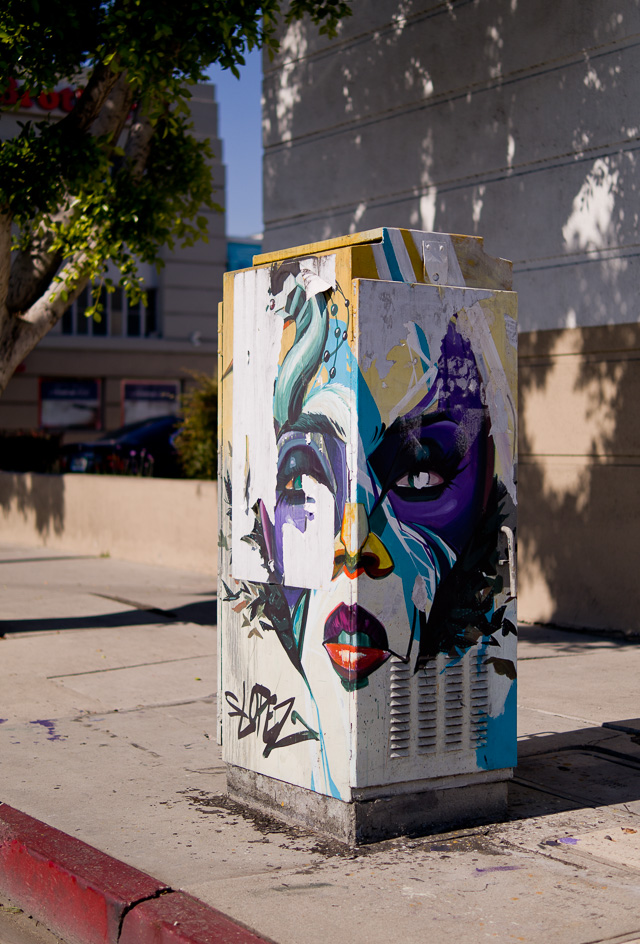
Three-dimensional = Having the three dimensions of height, width and depth. Melrose Avenue in Los Angeles. Leica TL2 with Leica 35mm Summilux-TL ASPH f/1.4. © 2017 Thorsten Overgaard.
Vario- is the Leica Camera AG name for zoom lenses. Vario-Elmarit, Vario-Elmar and Vario-Summicron and so on.
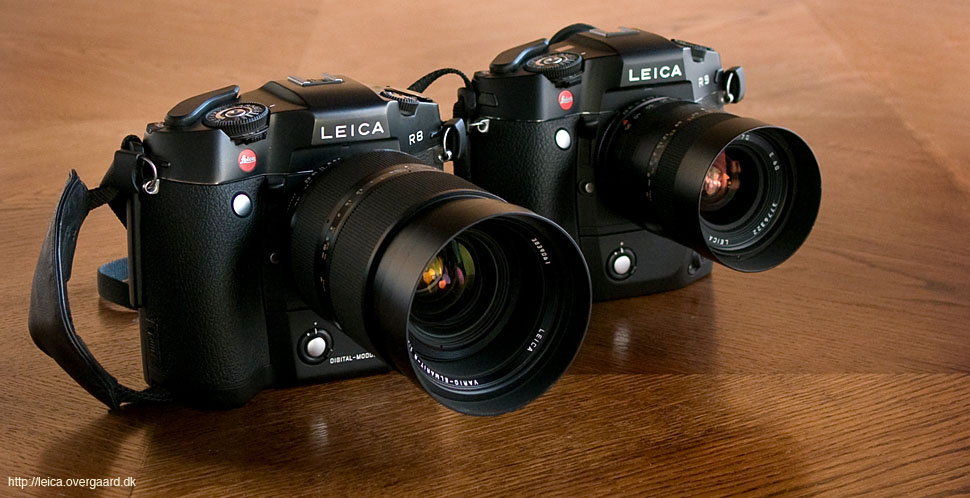
The Leica 35-70mm Vario-Elmarit-R f/2.8 ASPH (left) and the Leica 35-70mm Vario-Elmar-R ASPH f/4.0 (right)
Ventilated Shade - A shade is a hood in front of a lens that provides shade from light going straight onto the lens from outside what you are photographing, which could cause internal reflections like flare, which would make the picture less contrasty.
The ventilated shade has holes so it doesn't obstructs the view from the viewfinder. In many of today’s mirrorless cameras where there is no viewfinder looking ver the lens, so there is no actual need for a ventilated shade; but they are considered classic or vintage looking and are still in high demand. It makes no difference for the purpose of the shade (to create shadow) if it is ventilated or not.
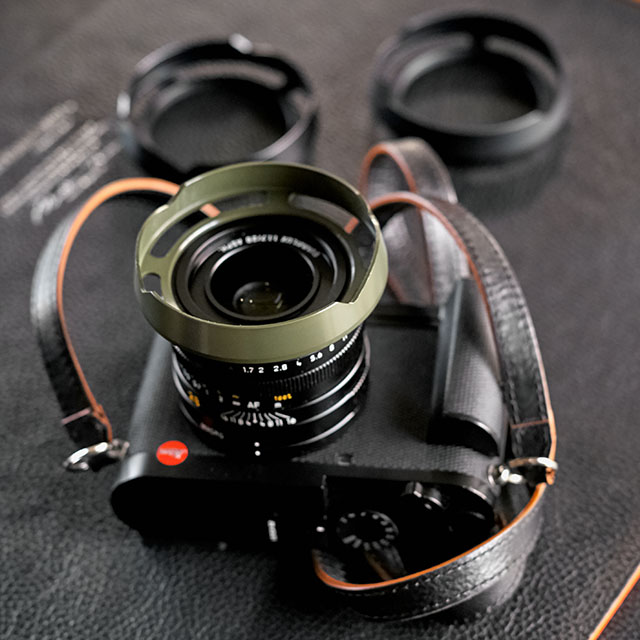
Ventilated Shade for the Leica Q. I make ventilated shades for most lenses and sell them from here.
Viewfinder a device on a camera showing the field of view of the lens. Also known as the German word "Messucher" (or Meßsucher).
1) A built-in viewfinder in a camera that simply show the frame you get when you look through the viewfinder.
2) A rangefinder viewfinder which is also used to focus the lens. In Leica M cameras two pictures has to meet and lay 'on top of each other' for the picture to be in focus.
3) An external viewfinder, usually on top of the camera in the flash shoe, so as to show the field of view of lenses vider than what the built-in viewfinder can show (15mm, 21mm, 24mm, 28mm etc viewfinders exist)
4) Very simple "aiming-devices" on top of a camera that is simply a metal frame without any optics. Just a frame, as for example very old cameras (the original Leica), or when using cameras in diving where you can't look through the camera.
5) A Electronic Viewfinder (EVF) that shows what the sensor sees "live".
Visoflex
A device mounted between the Leica M camera and a lens, containing a mirror mechanism like in a SLR camera, thus allowing the M user to 'preview' a picture using a tele lens larger than 135mm which is the maximum covered by the framelines in the Leica viewfinder.
Ø - Symbol for diameter. As in Ø49 for example which means that the filter diameter is 49mm for this lens (or if a filter is Ø49, it is 49mm in diameter and fits that Ø49 lens). The letter ø is also a common Nordic vowel.
Leica uses E to express their filters sizes, as in E49 for a 49mm filter size.

|
NEW VERSION 11.3 |
|
| |
 |
|
| |
|
| |
|
|
|
|
| |
|
| |
|
|
| |
Buy Now. Instant delivery.
New Version 11.3
ONLY $698.00
Now includes
4+ hours of
video tutorials.
100% satisfaction
or 100% refund.
More info.
|
|
| |
#2130-1121-3 |
|
| |
|
|
| |
Update to Version 11.3
Apply
code "UPDATE113" on checkout to get this complete version 11.3 update.
$298.00
Updates all previous Surival Kit versions since 2009. |
|
| |
|
|
Buy the complete new
Lightroom Survival Kit 11.3
The Legendary Tutorial for Photographers
Brand-new JUNE 2022-version.
Now with brand-new 4+ hours of video tutorials.
New sections on compostition and storytelling.
How to edit color photos.
How to edit black & white photos.
How to do keywords logical and easy.
The most successful photo editing kit ever
Photographer Thorsten Overgaard first released the Lightroom Survival Kit in 2009 and have honed it with new and fresh updates. This Version 11 is the most radical updated and renewed version ever, four years in the making.
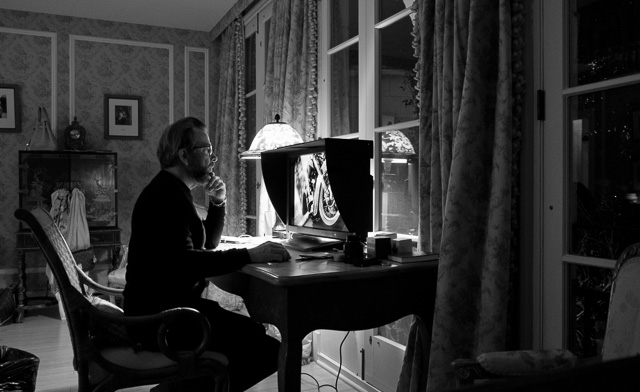
Professional workflow experience made simple, logical and easy to use.
Master editor makes it simple to understand
The Survival Kit is unique and one-of-a-kind being made for photographers for photographers. When someone understands their subject, they can explain it so it is easy to understand. The hallmark of Thorsten Overgaard is to make expert knowledge shown and told in a way so anyone can apply it.
Hands-on advice that works
With a 450 pages workbook and 4+ hours of video, every element of digital photography is touched on, in handy chapters and pre-flight checklists. Editing of color vs black and white photos, keywording, cropping of images, fine-tuning of tones, color balance and color control, export of originals, printing, archiving and backup, and much more.
Comes with the Overgaard Leica Presets (Value $48)
The Lightroom Survival Kit comes with Thorsten Overgaard's special-made Lightroom Presets for all digital cameras and for Leica digital cameras.
Understand all from camera to the final print
Chapters in this version goes over the background for High Dynamic Range (HDR), digital raw files and how to set up a professional photography workflow, from calibrating the screen to editing in Lightroom, and to making a final print. And more ...
10+ years experience in one package
No need to spend years figuring out the smartest way to do things when you can tap into the best way of doing things right here. The workflow of Thorsten Overgaard as been refined through years of field work with more than a thousand workshop attendees.
This method of workflow now used by thousands
The Survival Kit has been taught to thousands in workshops and in this Survival Kit. What does it do? It make you enjoy taking and making photos, and it increases your production considerabely. Most important of all, it'll give you back ownership of your files (which you will understand why is so important, once you have bought the Survival Kit and started applying its methods).
| |
|
|
| |
"Thorsten's methodology is perhaps not what hardware-, software- and cloud-companies want us to do, but as a former IT engineer I can only acknowledge his views about preserving our digital heritage. This workflow explained is for me the best I have ever seen".
★★★★★ |
|
| |
|
|
Video tutorials, image files, presets, checklists, definitions, tutorials of Lightroom, that boils down years of experience to a workflow you can implement in less than one day.
Start working in minutes. |
|
|
| |
|
| |
|
| |
|
| |
|
| |
|
| |
|
|
|
|
|
|
|
CONTINUES ON PAGE 3 ---> Index of Thorsten Overgaard's user review pages on Leica M9, Leica M9-P, Leica M-E, Leica M9 Monochrom, Leica M10, Leica M10-P, Leica M10-D, Leica M10-R, Leica M10 Monohcrom, Leica M11, Leica M 240, Leica M-D 262, Leica M Monochrom 246, Leica SL, Leica SL2, Leica SL2-S, as well as Leica TL2, Leica CL, Leica Q, Leica Q2 and Leica Q2 Monochrom:
|